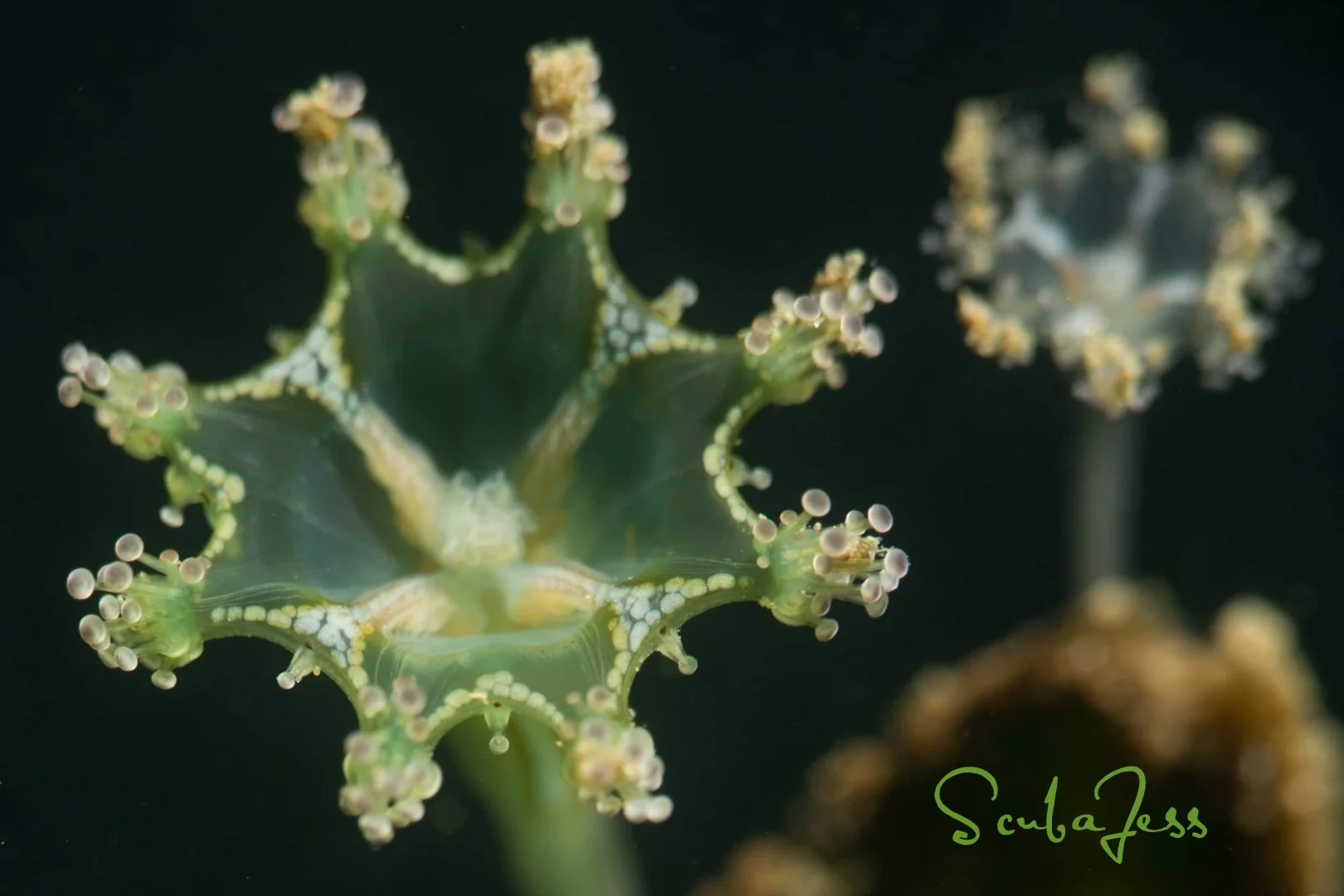
7 sunflower stars! Medium size, some looking a little weak. Stalked jellies, larval fish, surf anemones. Macrocystis kelp, boa kelp, small bull kelp.
No rocky
would you be interested in sharing the sunflower star encounter data? I believe it is useful even without exact sizes... there's a few pieces of info we need to add it to the encounters database though... I'll message you about it :)
Sekiu is one of our favorite dive sites in Washington. It's a very colorful yet shallow dive, where you'll see gorgeous kelp and many beautiful creatures not found in the sound. Highlights include fish-eating anemones, sandlances, intricate tunicates and more. If you're lucky and you're looking in the right spots you may see rock greenlings 🦄🐟🌈💖 or silverspotted sculpins.
It's easiest to dive this site by following around the outside perimeter of the kelp and huge boulders. Under water, you'll see the massive boulders plastered with color, kelp and life. The maximum depth will be about 30'. On the outside of the kelp, the current can be strong on large exchanges. Throughout the site there can be surge if there are waves.
Minimal waves for the last day or two will give you the best visibility.
We dive here off slack on mild to medium exchanges (particularly floods) without a problem. Be sure to plan a day when the tide is not too low! Probably a 2 foot tide and flooding at minimum is required. An even higher tide is ideal.
Going thru the kelp and between the large rock formations has its rewards too.
*** Kelp ***
Be super careful about kelp. If you get snagged in kelp, freeze. Slowly feel around common potential snag spots for entanglements (in my case, on my pony bottle, my camera, and on my fin). Back kick a little. Bring a knife and use as needed. Some say you can bite thru kelp if absolutely needed, but we haven't tried it. Know that it is easier to go between kelp underwater than thru it on the surface.
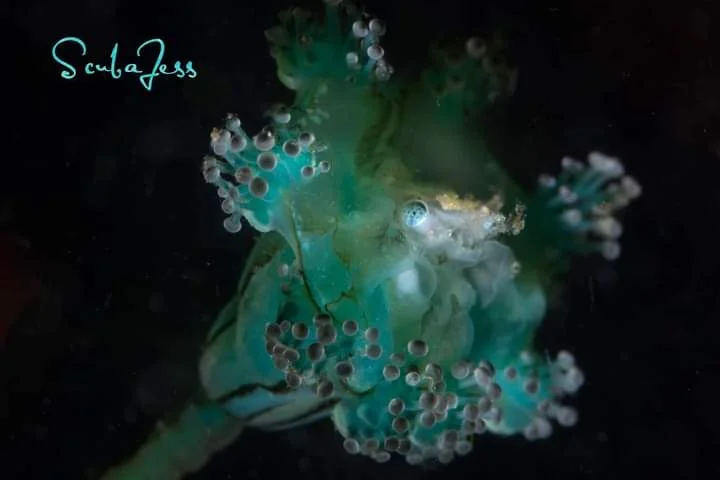
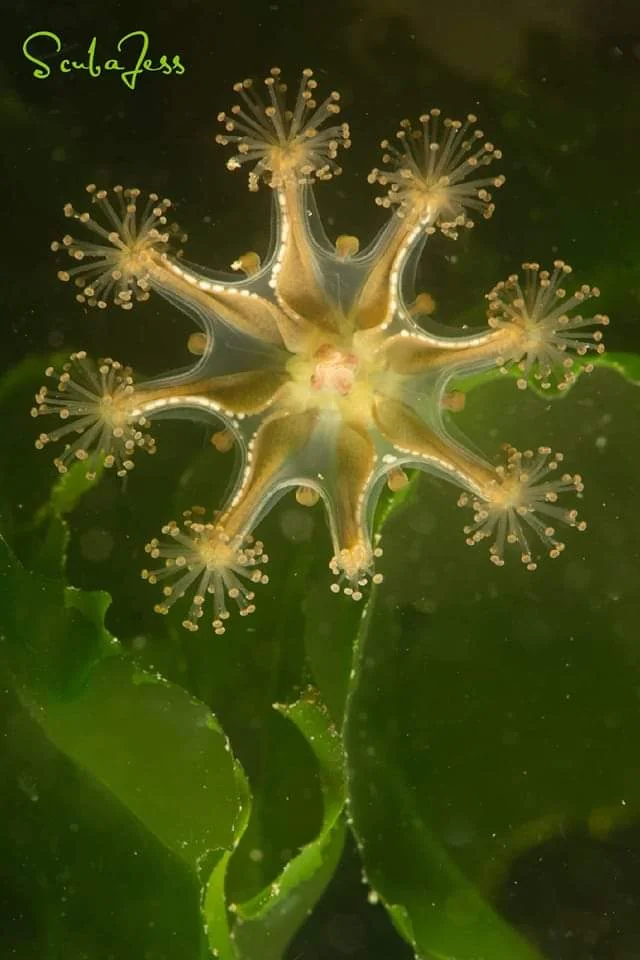
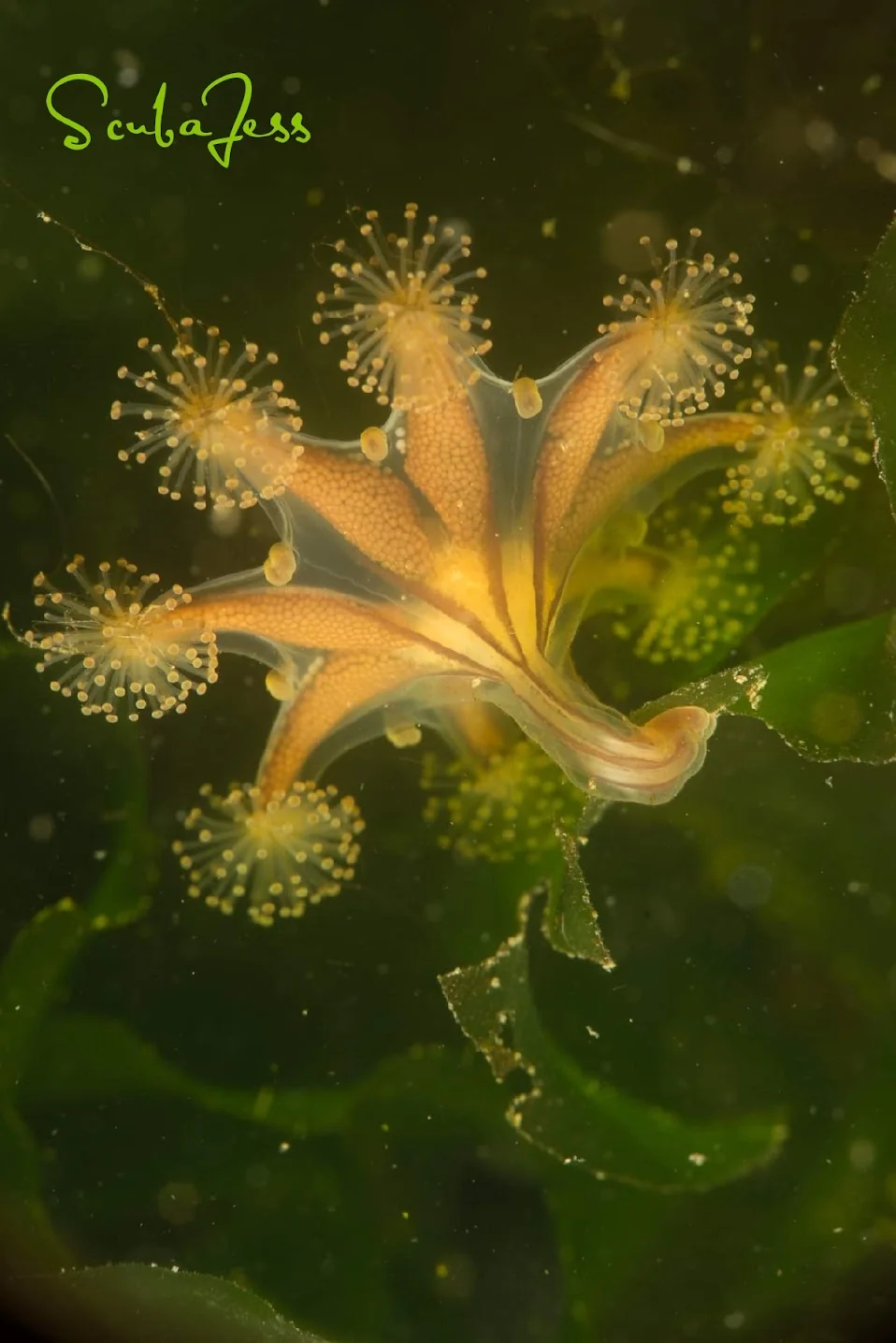
Be sure to look on the surfgrass in front of the entrance for stalked jellyfish. They're typically aqua-colored here, about 1-2cm long, and are attached to the surfgrass in about 10-15 feet of water. Sometimes you can find tiny crabs living in the stalked jellies!
This can be a difficult beach to get back up on... the sand at the exit here can get like quicksand if the waves pick up, often making the exit very challenging. And often a steep berm of soft sand to step over can form in shallow water! In our experience swell happens here more often than emeralddiving.com suggests! Definitely check the wave forecast and wave buoys before you head out!
Buoys data can be viewed by zooming out on the map below and selecting the buoys.
Waves or not, we suggest keeping your reg in your mouth upon entry/exit. If you get tossed down, often it can be easier to go back into deeper water and retry your exit rather than trying to stand up on the beach or shallow water..
Some prefer to take sea sick medication when diving this site as it can be surgey even if things look relatively mild. ScubaJess recommends Ginger Gravol Gummy Chews.
*** It is recommended to go with somebody more experienced here your first time here. We recommend equipping/training yourself as a solo diver as well as it can be hard to share air in the conditions of this site. If you have any tips or additional observations, comment below or let us know using the contact info on our about page ***
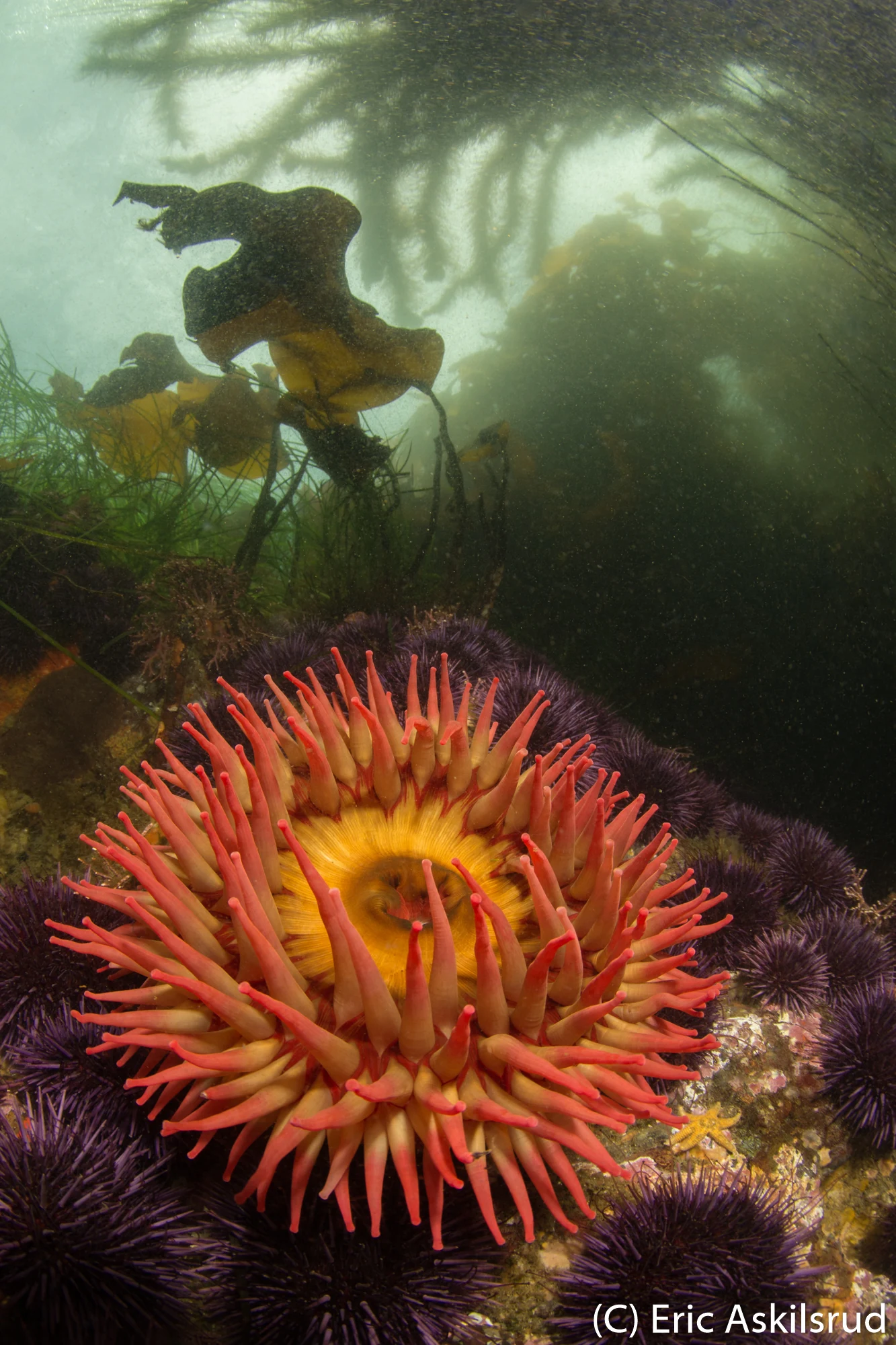
Reefscape at Sekiu Jetty. Photo by Eric Askilsrud.
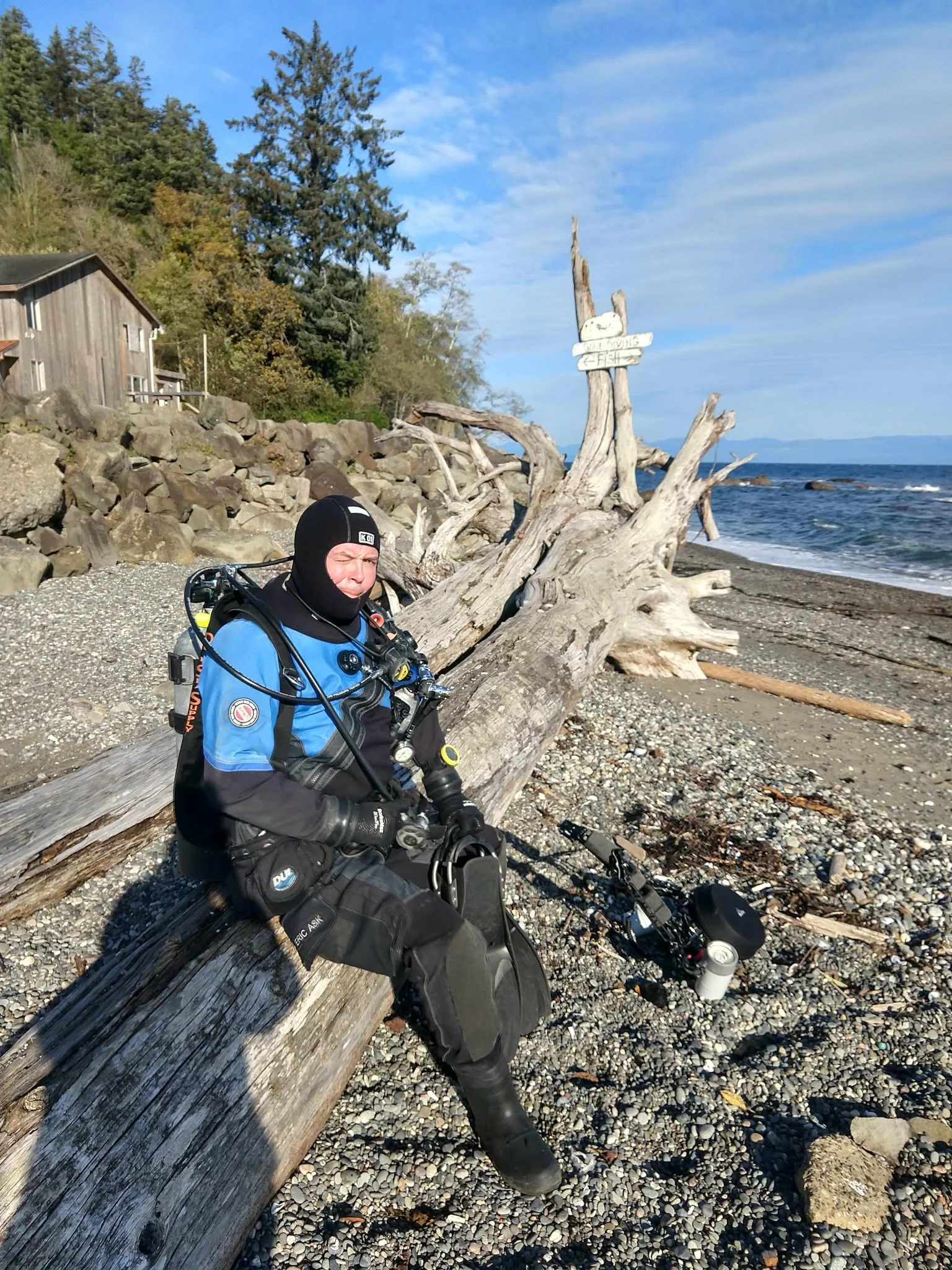
Eric Askilsrud at Sekiu Rocks. Photo by Scuba Jess.
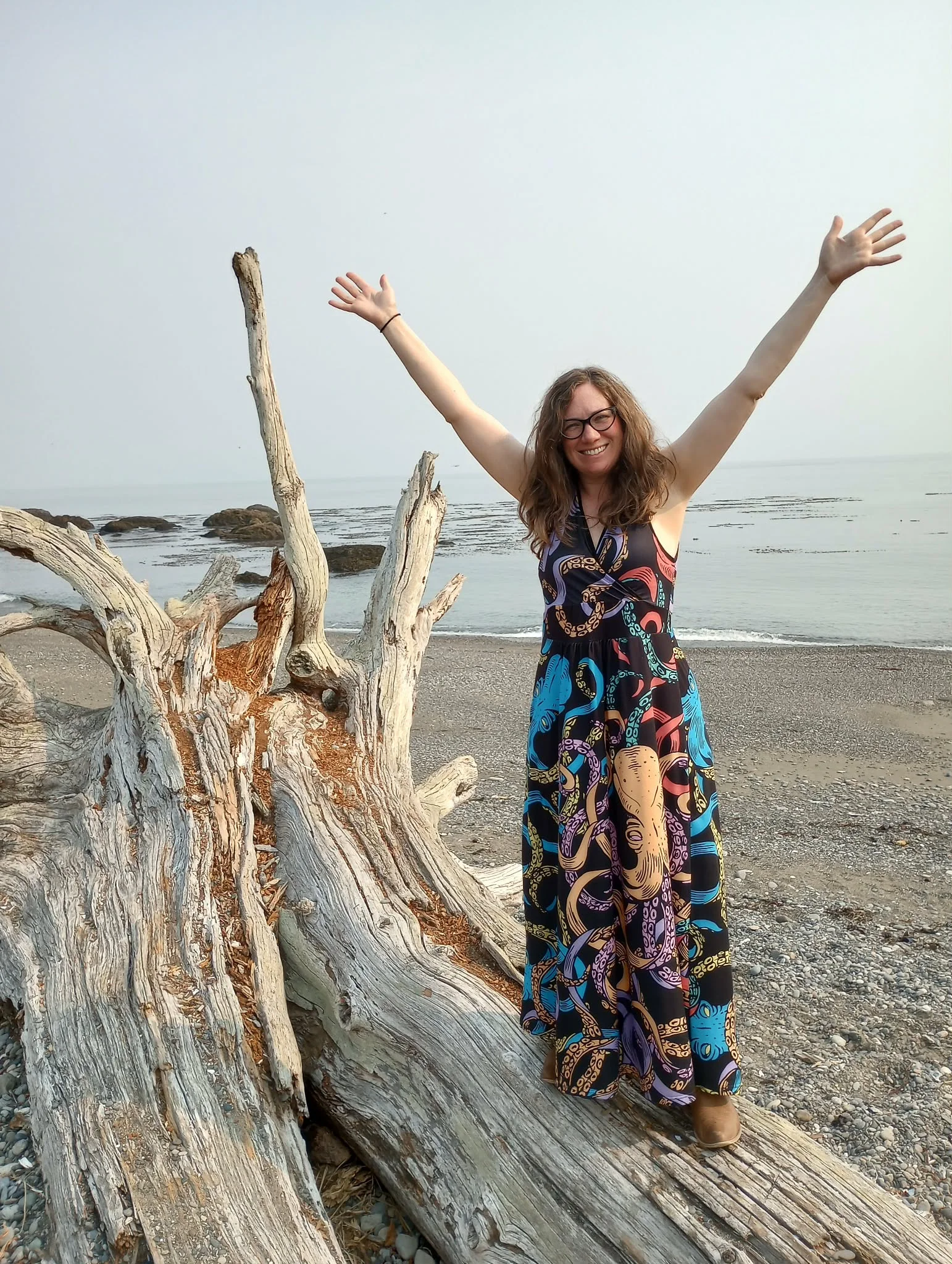
Scuba Jess at Sekiu Rocks. Photo by Eric Askilsrud.
Two stalked jellyfish at Sekiu Rocks. Photo by Scuba Jess.
A teal stalked jellyfish eating a baby crab at Sekiu Rocks. Photo by Scuba Jess.
Close-up of a stalked jellyfish attached to algae at Sekiu Rocks. Photo by Scuba Jess.
Stalked jellyfish attached to algae at Sekiu Rocks. These live in surgy areas. Photo by Scuba Jess.
Scenery & 360° views
For more dive site scenery—parking, shore entry, and the area around the site—visit our , where we even project a dive flag into the scene at the point of entry!