Site Resources & Tools


Dive planning for Keystone Jetty
Site Briefing
Overview
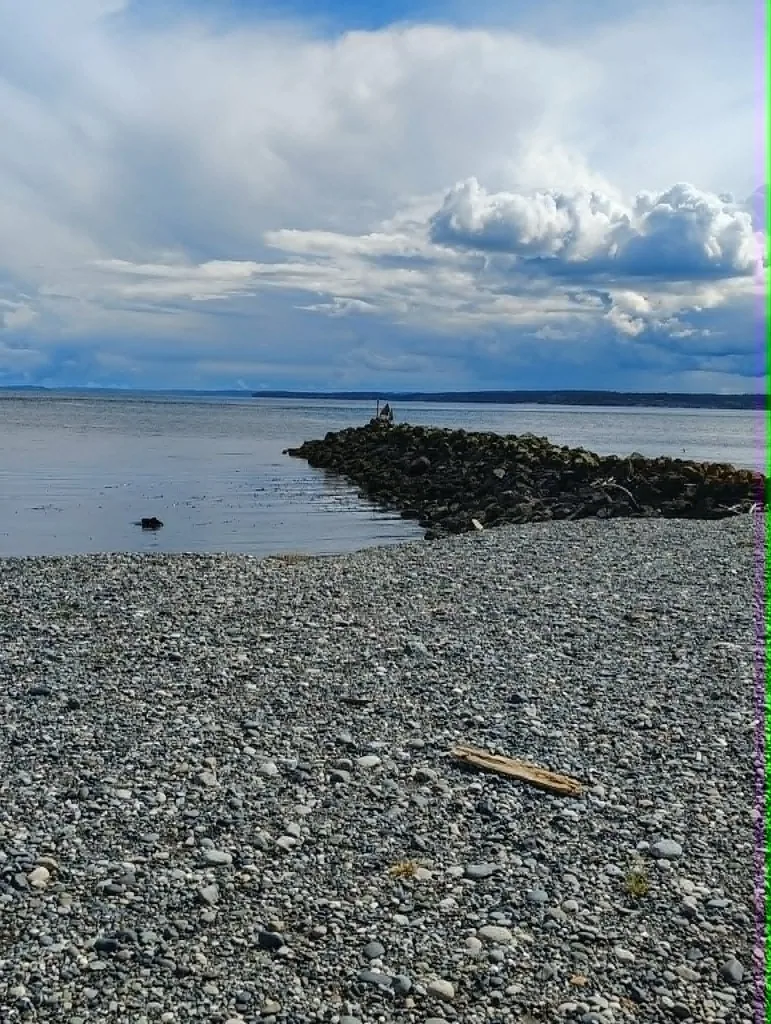
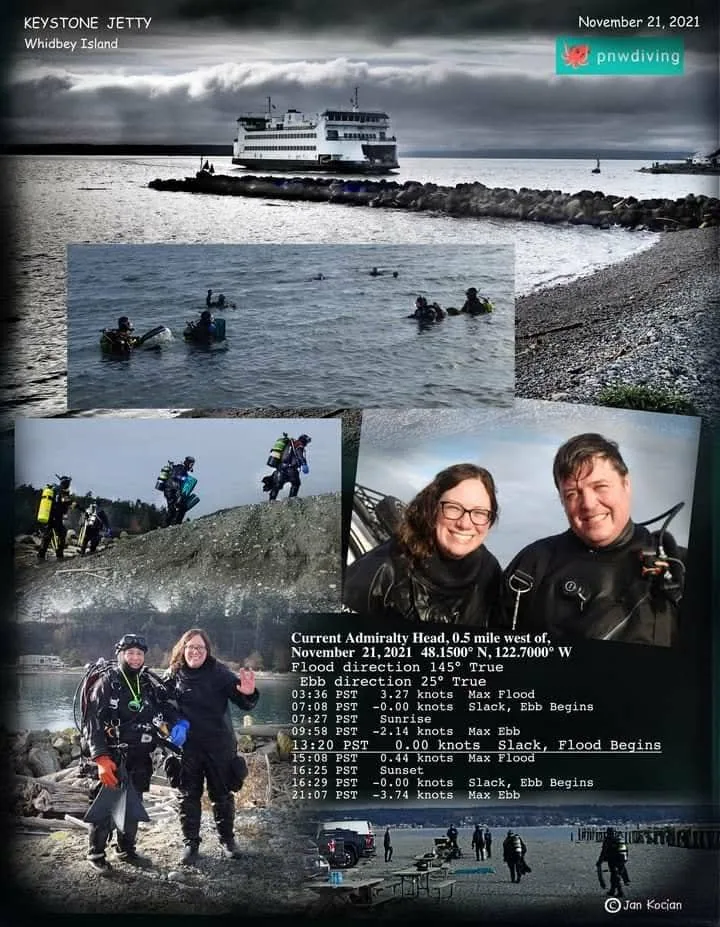
Keystone Jetty is one of the best shore dives in the Pacific Northwest. The jetty is the rock breakwater protecting the Coupeville–Port Townsend ferry terminal in Fort Casey State Park, on the west side of Whidbey Island. Seen from the surface, the jetty is a 50-yard-long sloping boulder pile. The jetty extends about twice that distance under water.
From the Seattle area, take the 20-minute Mukilteo–Clinton ferry then a 20-minute drive up Highway 525. Or you can drive onto Whidbey Island over the Deception Pass Bridge from the north instead.
Currents & Slack Timing
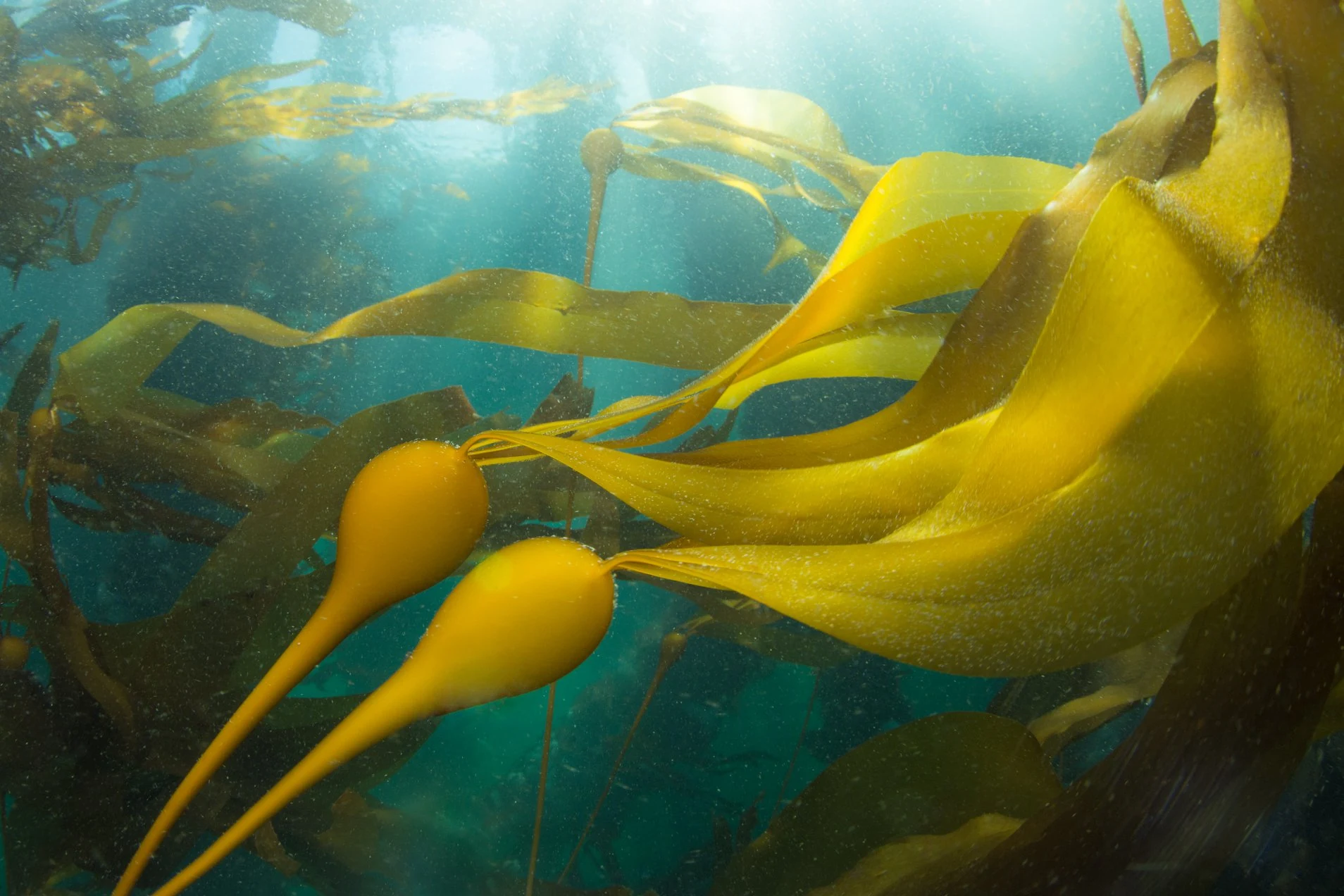
Keystone Jetty is HIGHLY current-sensitive, and it's exclusively a slack-before-flood (low tide) dive — do not show up at high tide expecting to do a slack dive. Use our Keystone Jetty slack-water timing tool to pick the best days. The strong currents of Admiralty Inlet impact the end of the jetty more, so proceed toward the tip of the jetty with caution.
PRO TIP: If the flood is mild or long, you can often jump in for a second dive during the flood after your first slack at Keystone Jetty. Sometimes we'll bring Nitrox 40% for maximum bottom time with a minimal surface interval.
LATE SLACK? TRY POINT HUDSON: If slack at Keystone Jetty falls too late in the day, consider diving Point Hudson in Port Townsend instead — it is a similar shore dive that typically slacks about three hours earlier.
Wind & Weather
Keystone Jetty is highly sensitive to south winds. A long fetch up Puget Sound can build large waves, which can make the site unsafe. Always check the wind forecast linked in the site resources before you leave home. Our video on currents, tides, wind and waves features Keystone Jetty extensively.
Our rule of thumb: pull up the six forecasts in the pnwdiving Keystone weather link. If more than three show >6 mph winds from the south, the site is not diveable. North winds are usually fine — the jetty is much more protected from that direction. Just be aware that strong winds in any direction can push slack earlier or later than predicted, and viz will also be poor if there have been strong recent winds from the south.
Reminder: as we show in our video, waves are much less forgiving in dive gear than in a swimsuit — what feels like manageable chop without gear can knock you flat when you're loaded up with a tank, weights, and fins.
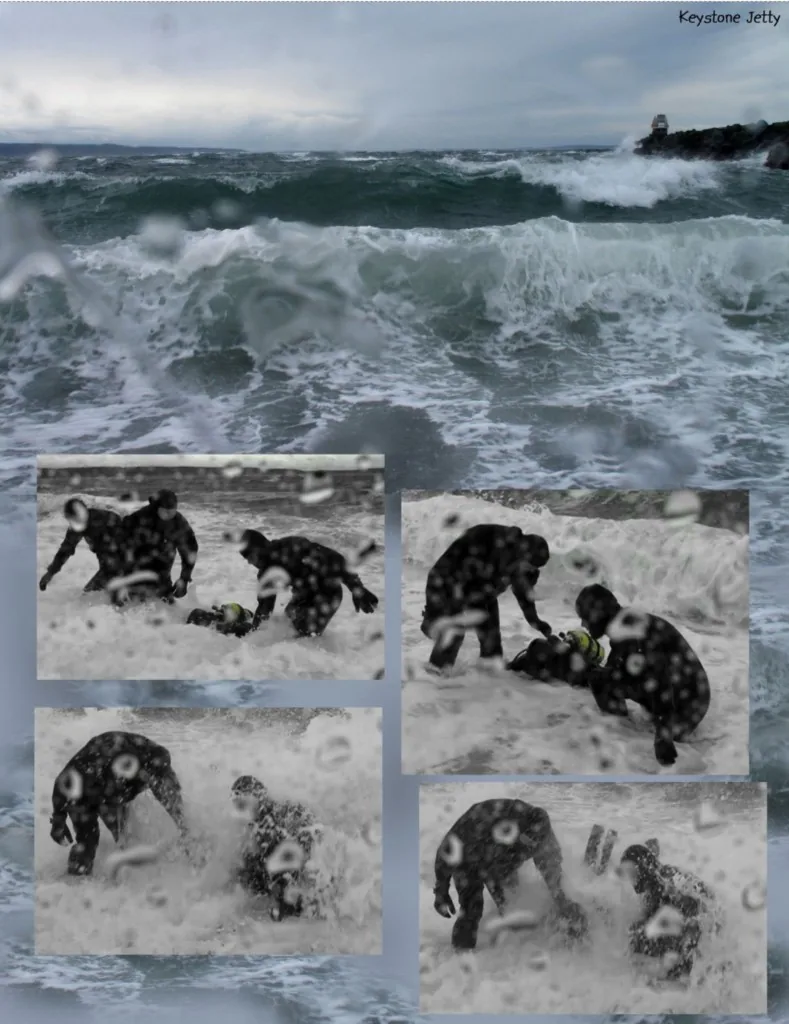
- Always keep your reg in your mouth on entry and exit.
- Even on a calm day, cargo ship wakes can produce rogue waves at the shore.
Backup Plan: A Nearby Alternative
If you make the drive and Keystone Jetty conditions don't cooperate — big chop or unfriendly tides — Driftwood Pond 2 is a nearby alternative. It's a remarkable jellyfish pond just up the road from Keystone Jetty, which is unimpacted by tides or long fetch.
Facilities & Parking
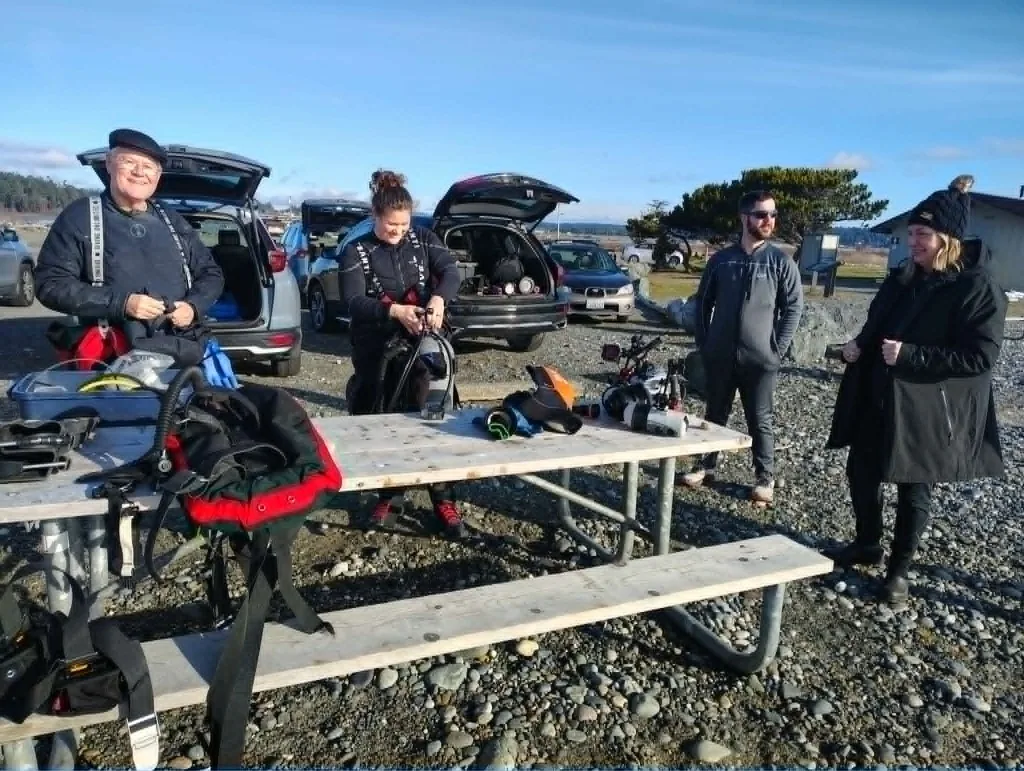
Keystone Jetty has bathrooms, hot and cold freshwater showers for rinsing gear, picnic tables, and plenty of parking. A Washington State Discover Pass is required to park, and you can buy one on site if you don't already have an annual pass. Planning a night dive? You'll need a permit — contact Washington State Parks ahead of time to arrange one.
Entry & Exit
Avoid Keystone Jetty during extremely low tides. The exposed kelp and rocks become incredibly slippery and the entry and exit get genuinely dangerous.
Stay at least 15 feet away from the side of the jetty when entering: there are rocks right alongside the breakwater that are easy to trip over. Walk into the water with a 15-foot buffer between you and the jetty.
Winter Log Hazard
After winter storms, drift logs often accumulate in the water in front of Keystone Jetty. If logs are floating anywhere near the entry area, do not dive here — bobbing logs can pose real hazards. If you suspect logs may be present and you can't see for yourself, drop a question on this site and locals can usually tell you what they've seen lately.
Ferry Traffic & Safety
The west (ferry-lane) side of Keystone Jetty is off limits due to the ferry in the area. When the Coupeville–Port Townsend ferry arrives or departs at the Keystone terminal, it gets extremely noisy and you can often feel a strong current. Consider holding onto a rock until a passing ferry clears.
Finding the Life
The densest invertebrate life at Keystone Jetty is along the bottom rocks deeper than 45 feet. If you're comfortable with the diving at Keystone, we recommend heading out to the end of the jetty itself for the best life as soon as the conditions allow. Waiting at the Rock of Life 1 is often a great place to feel out the current before you commit to heading out to the end.
There are three prime spots we call the "Rocks of Life", which are often the best places to find marine life.
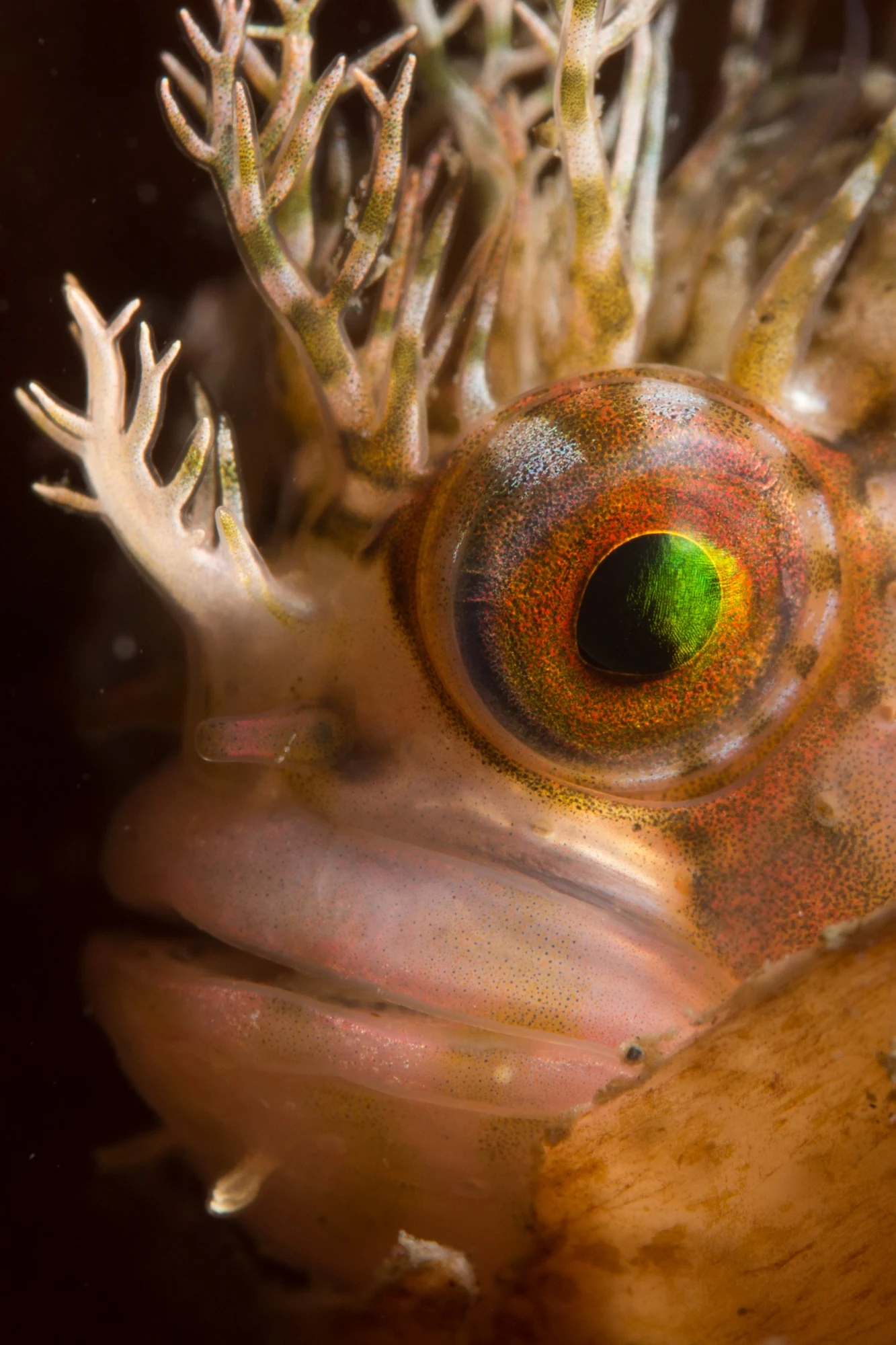
- Rock of Life 1: Found at roughly 35 feet where the line connects. Often you can find warbonnets here, and a famous oft-photographed dynasty of male scalyhead sculpins dubbed Fred the nth.
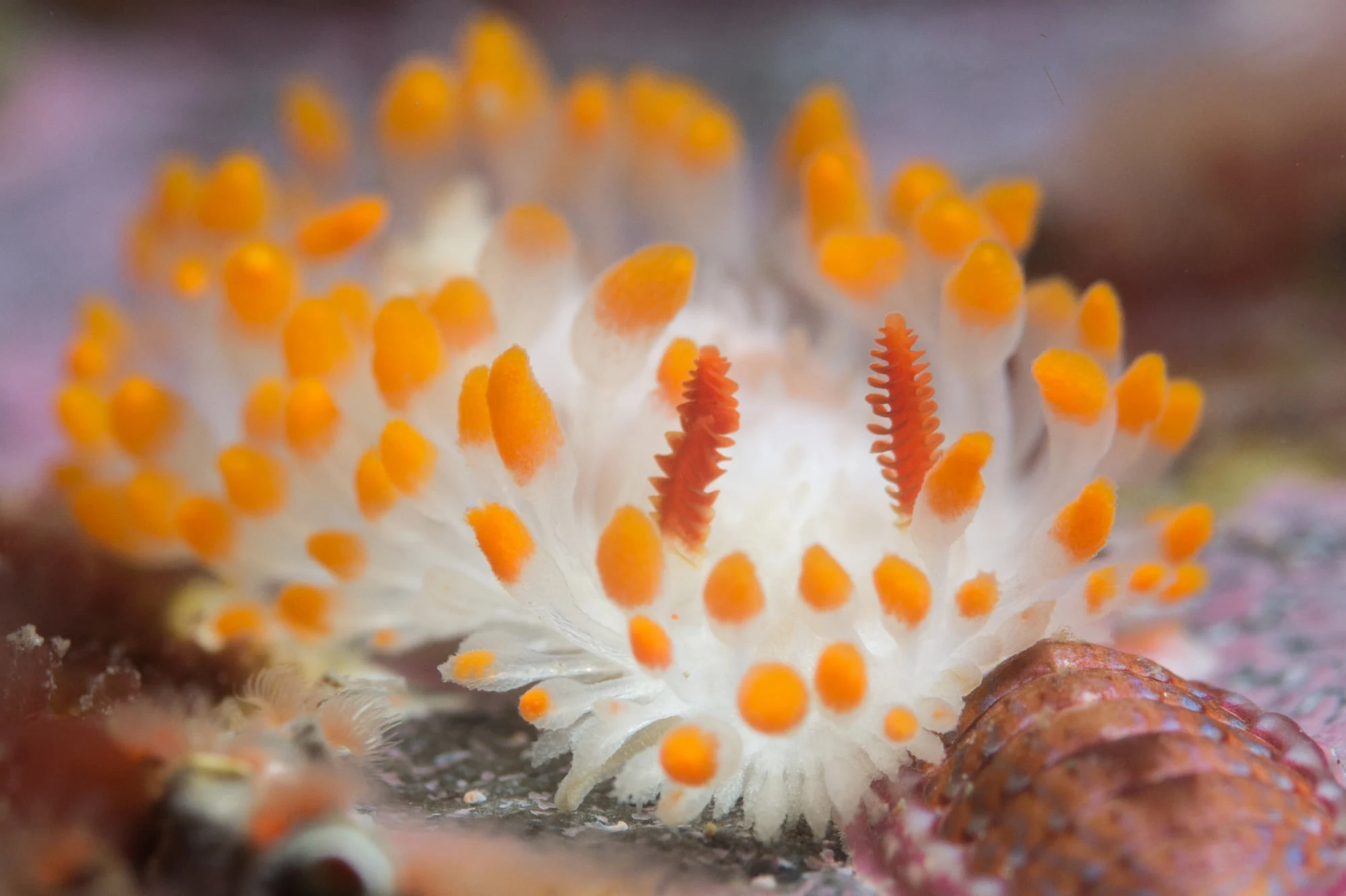
- Rock of Life 2: Located at the very end of the jetty. It is pocked by giant barnacles covered with nudibranchs and orange tunicates.
- Rock of Life 3: Around the bend from the end of the jetty. It features a rock face that slopes at a 45-degree angle up from a shelf. Often warbonnets, basket bryozoans, and nudies can be found here.
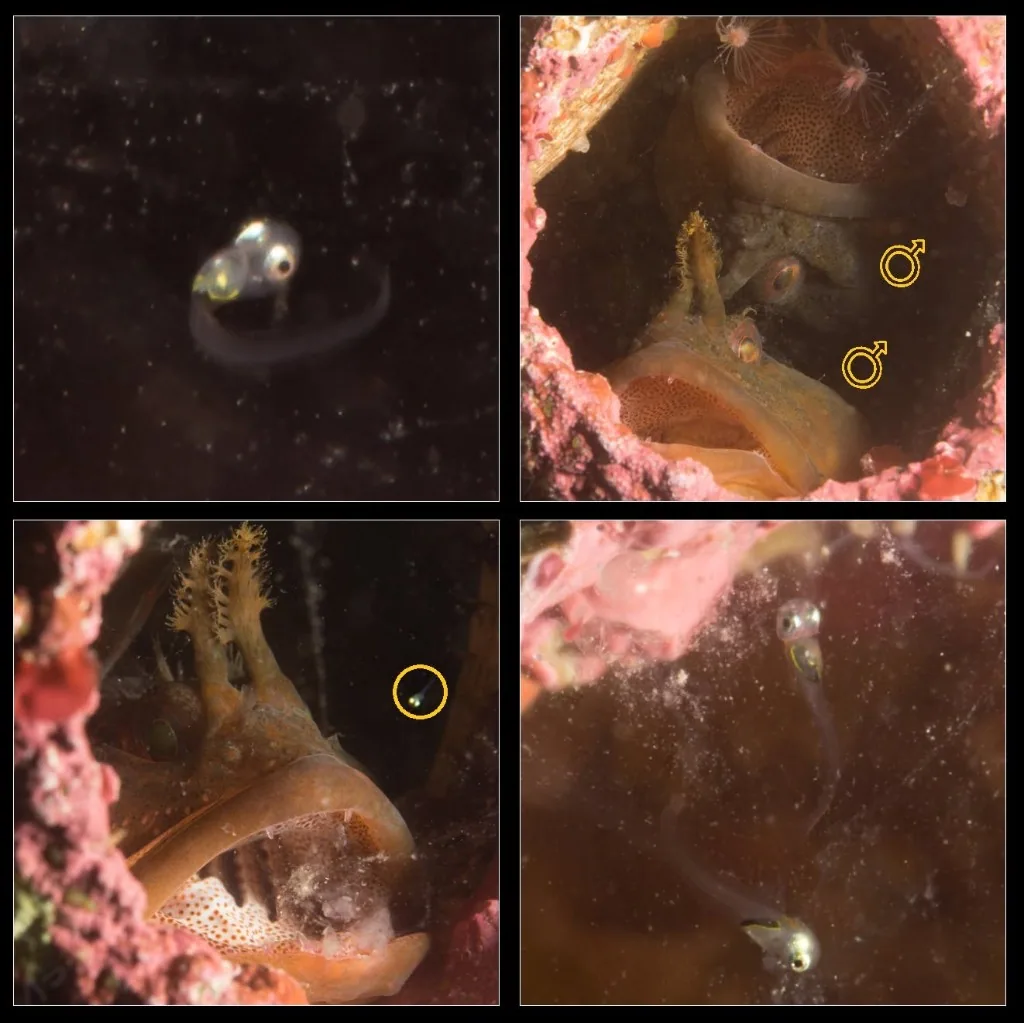
Occasional finds keep Keystone Jetty interesting for repeat divers: in spring, look for juvenile Pacific spiny lumpsuckers clinging to broadleaf kelp in the shallows. Candy-stripe shrimp can occasionally be found tucked under painted anemones along the line. Baby Puget Sound king crab can sometimes be seen near Rock of Life 2.
Variations: Barnacle Reef & Pilings
Most divers come for the main jetty, but there are two other features at Keystone Jetty worth knowing about.
The Barnacle Reef is a deeper dive that sometimes has wolf eels. To get there, follow the line that runs east from Rock of Life 1. About halfway toward the old pilings, a rope connects to the main line and heads deeper — follow it to find a barnacle reef where wolf eels occasionally turn up. It's not as colorful as the main jetty and is even more current-sensitive, so save it for days when you want to mix things up and the currents are friendliest.
The Keystone Pilings sit roughly 250 yards east of the jetty. The wharf has degraded over the years and isn't great anymore. See our Keystone Pilings page for details.
Food Stops on Whidbey Island
Pickles Deli in Langley is a must-try sandwich shop on Whidbey Island that we recommend you visit on the way up to or back from Keystone Jetty. Try the Spicy Italian, but everything is good! Closed Sundays, so plan accordingly.
There's also Callen's Restaurant right across the street from Keystone Jetty. You can get hot chocolate and coffee between dives there. It can be a fun place for groups of divers after a dive!
Check out our map for the nearest dive shops.
If you want a tour of Keystone Jetty, feel free to ask!
⚠️ Before diving at Keystone Jetty, always check the site-specific wind/wave forecast, tide/currents, and recent reports (latest: Jun 27, 2026) !
Nearby Stations
Click a pin to see current, tide, camera, or buoy data near the dive site (you may need to zoom in or out)
Nearby Sites
- Keystone Pilings (<1 mile)
- Admiralty Head (~1 miles)
- Driftwood Pond 2 (~2 miles)
- Driftwood Pond 1 (~2 miles)
- Driftwood Park (~2 miles)