Site Resources & Tools

Dive planning for Salt Creek
Site Briefing
Overview
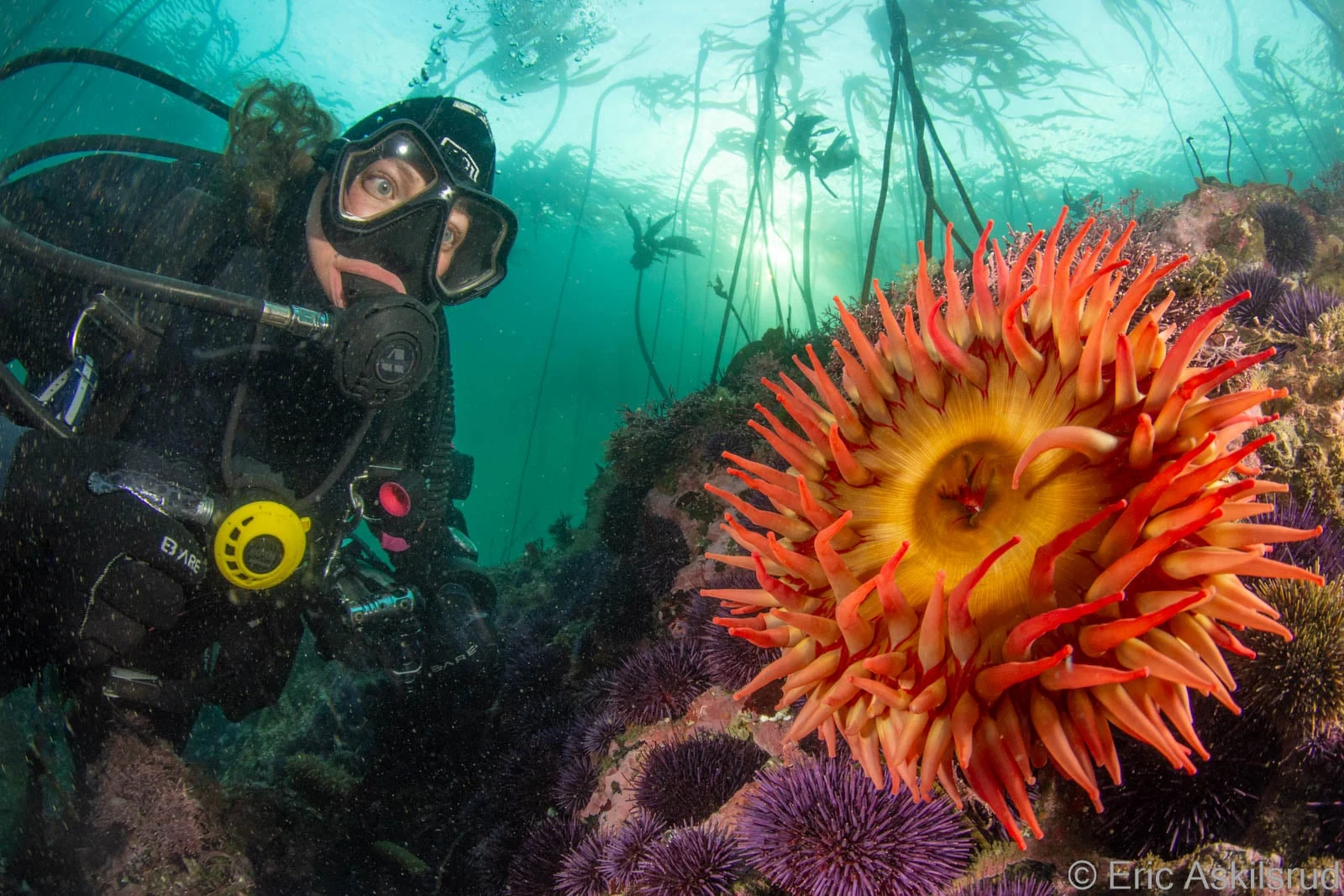
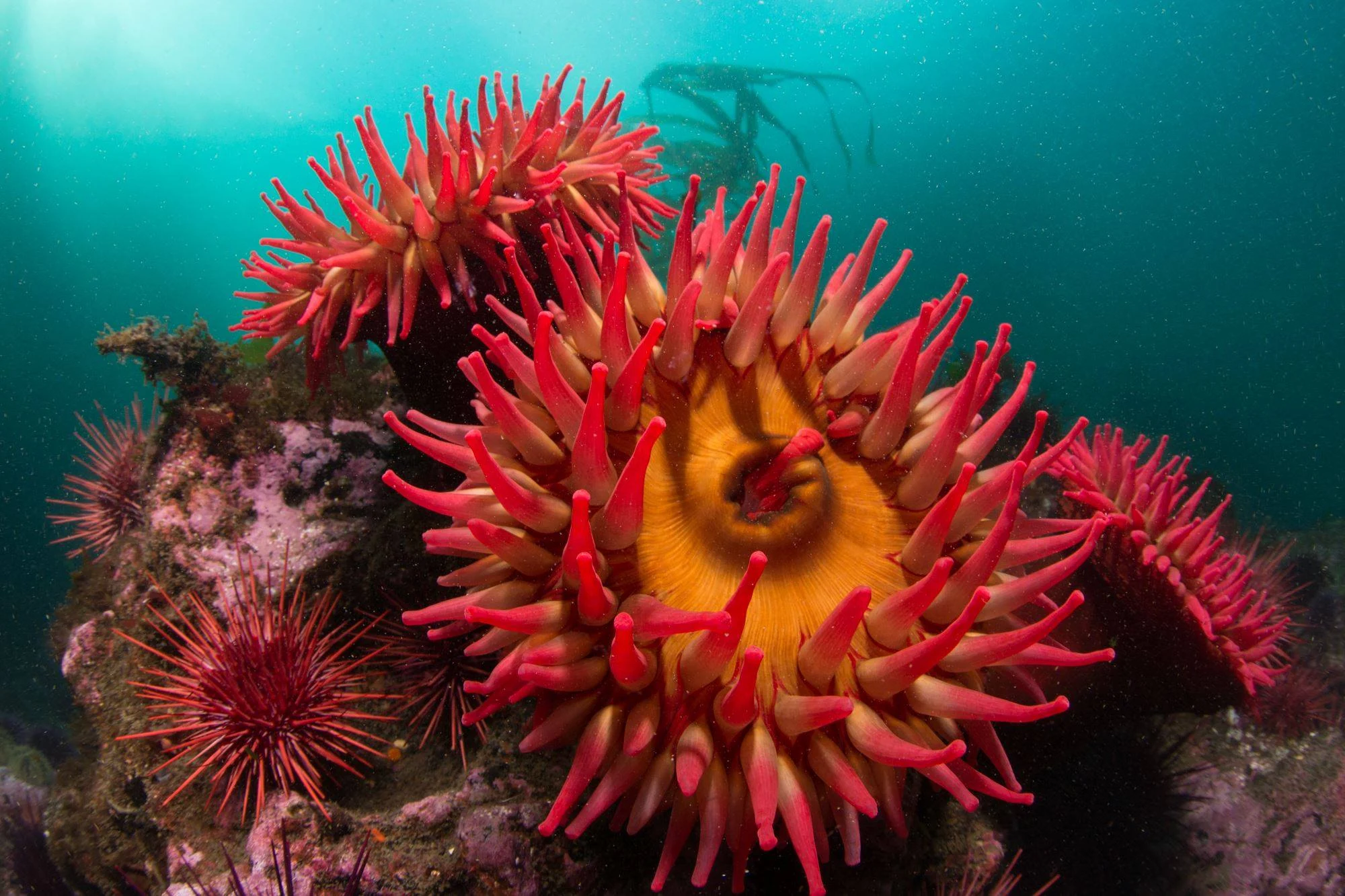
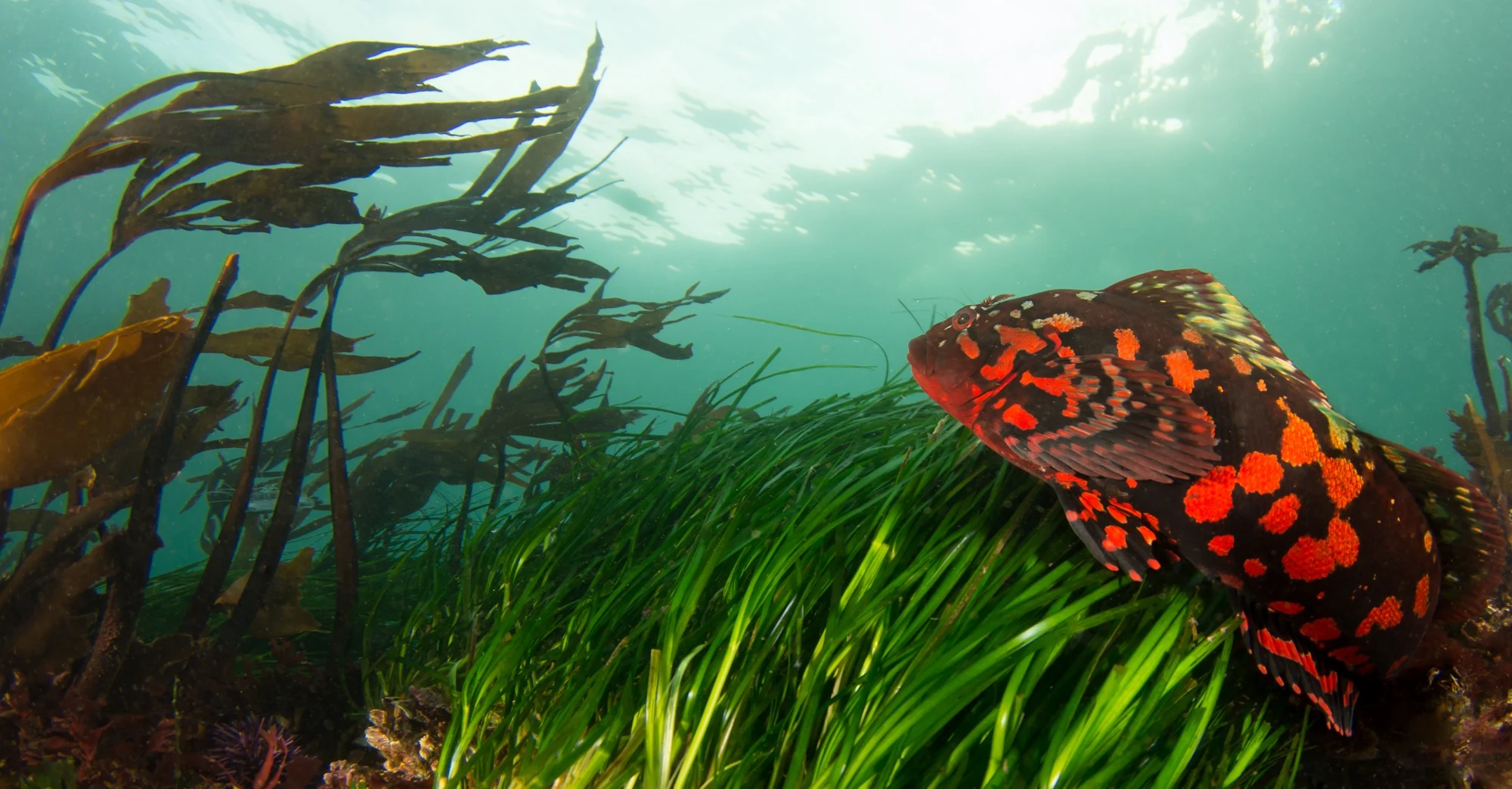
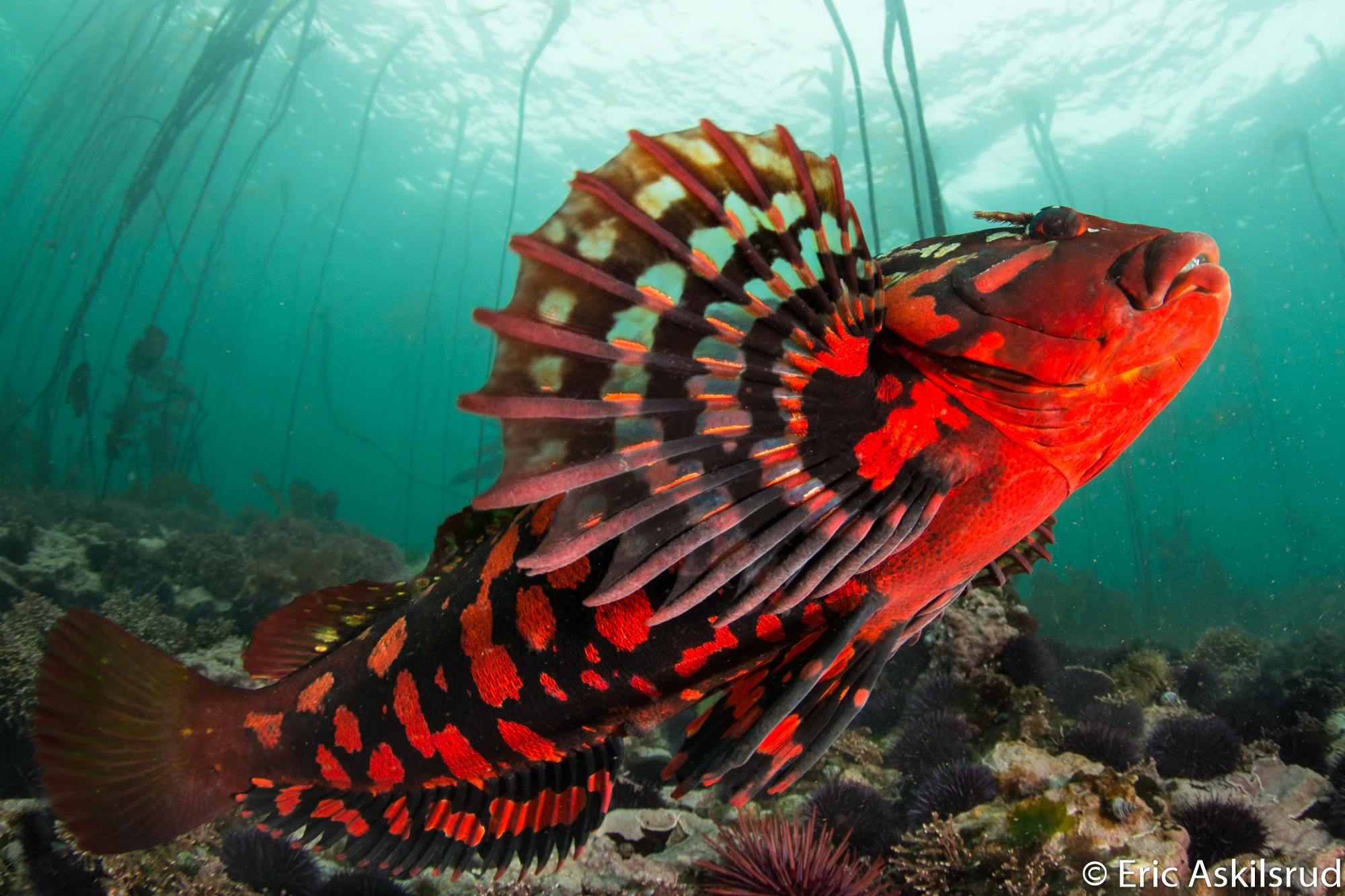
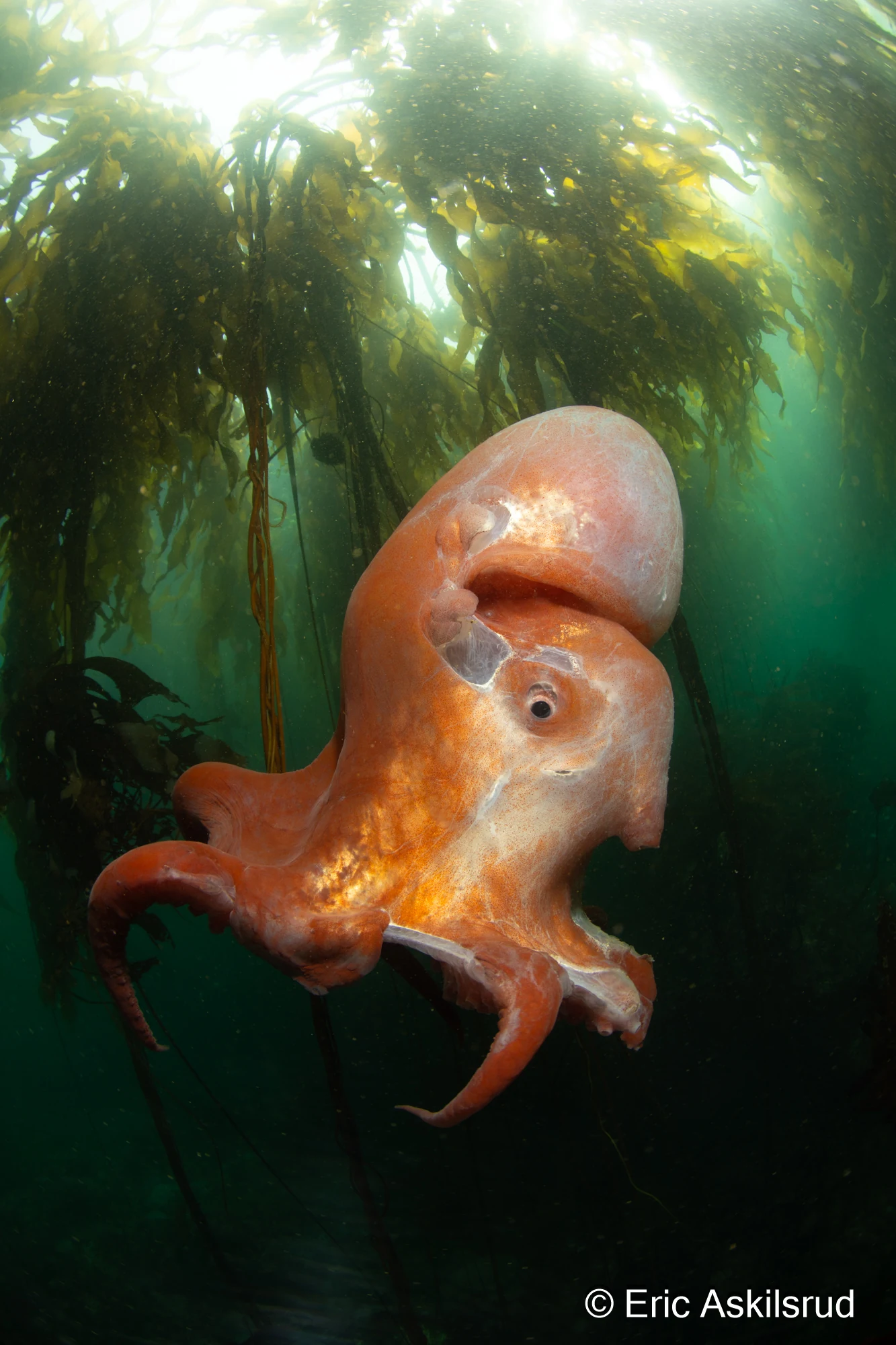
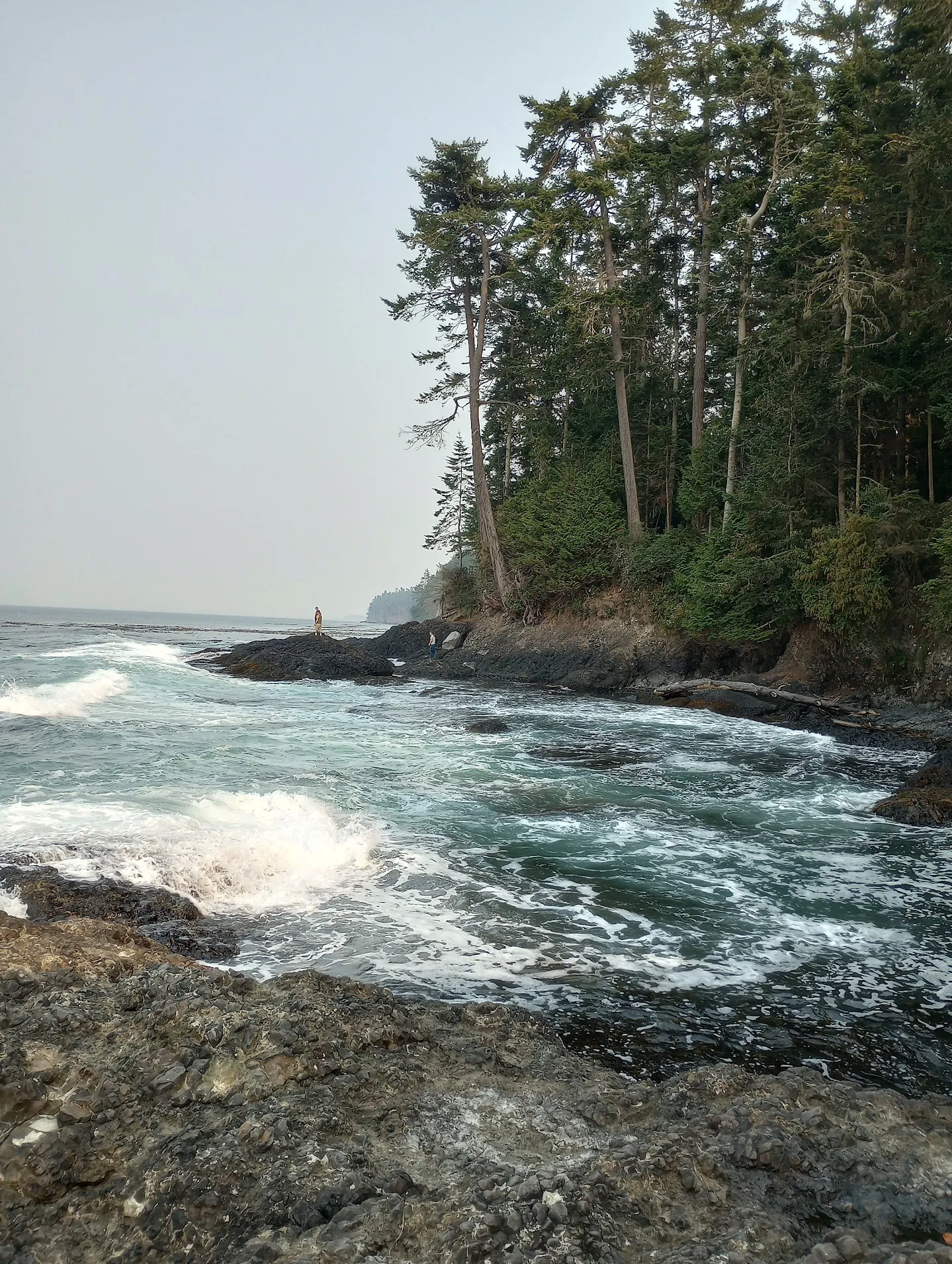
Salt Creek is a fantastic dive site and campground near Port Angeles. It features beautiful kelp forests, large fish-eating anemones, wave-carved canyons, fields of urchins, and marine life that is uncommon in Puget Sound.
This is an advanced site and can be potentially treacherous. Conditions may include surge, waves, thick kelp, and entanglement risk. You can enjoy the shallow bay, venture into the kelp, or go beyond the kelp at about 20 feet depth. Each area is unique and beautiful.
Weather (Critical)
Weather is often the single most important factor at Salt Creek. Wind, swell, and fog can make for a very unsafe day.
There is no guaranteed forecast method, and sometimes you must drive out and assess in person. Be prepared to change plans if conditions look bad (for example, 1-foot waves smashing the beach is a red flag).
- Use the Salt Creek wind forecast link in the site resources (Windy).
- Check forecasts repeatedly in the days/hours before your dive.
- If possible, use Windy Premium for hourly forecast detail.
- Review WAVES forecast and compare ICON and GFS models.
- Target: ICON near 0' and GFS around 0-1 ft.
- Switch to meters for finer resolution (.1 m increments). Around 0.2 m on GFS has worked in at least one case.
- Watch for building waves in the timeline.
- Use Wind forecast model-comparison view; ideally keep major model winds under ~7 mph.
- South/east wind direction is often better here.
- Scan surrounding map colors for nearby high-wind zones.
- Check nearby areas like Neah Bay and Haro Strait for regional clues.
Buoys (day-of):
- Neah Bay Buoy: west of site; use planning map -> buoy icon -> Wave Heights.
- Port Angeles Buoy: east of site; use planning map -> buoy icon -> Wave Heights.
- Recent good example: Neah Bay ~3 ft and Port Angeles ~2 ft.
- Buoys may be offline. (As of 10/9/23 Neah Bay buoy was unavailable; NOAA estimated return in late summer '24.)
Also check the Race Rocks webcam via map links.
Tides / Current
We have not had issues diving this site during a flood, and visibility is often better on a flood. A mild ebb can be fine, but strong ebb can build quickly.
- If you are less experienced with current, choose a mild flood day.
- Tidal height can matter more than current speed here.
- In summer, low tide can make kelp too thick and footing too slippery.
- We look for tidal height above ~2.5 ft.
- For first visits, roughly 2.5-7 ft can be a workable range.
- Use the linked tidal station, but note it may not always be highly accurate.
Entry
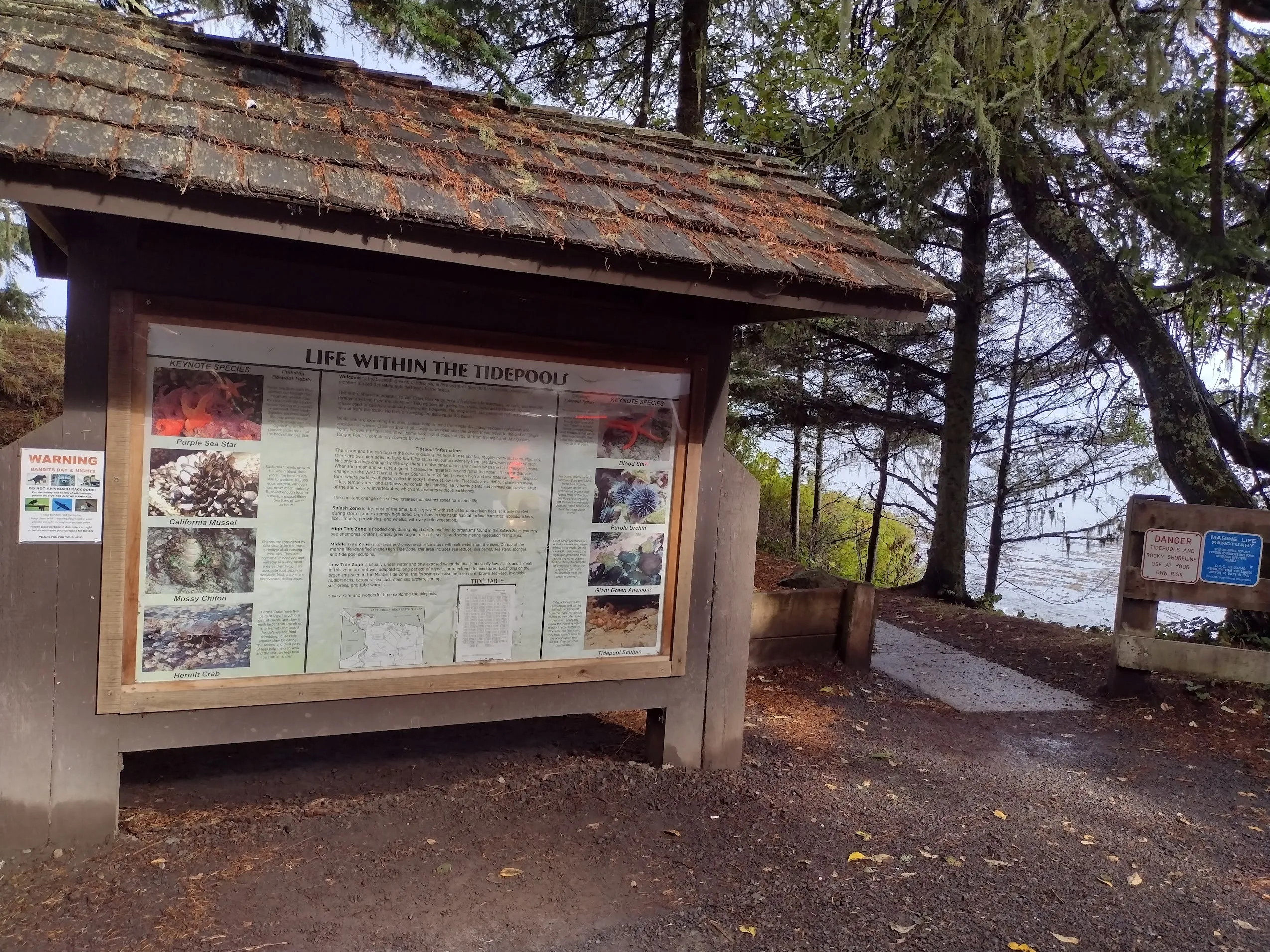
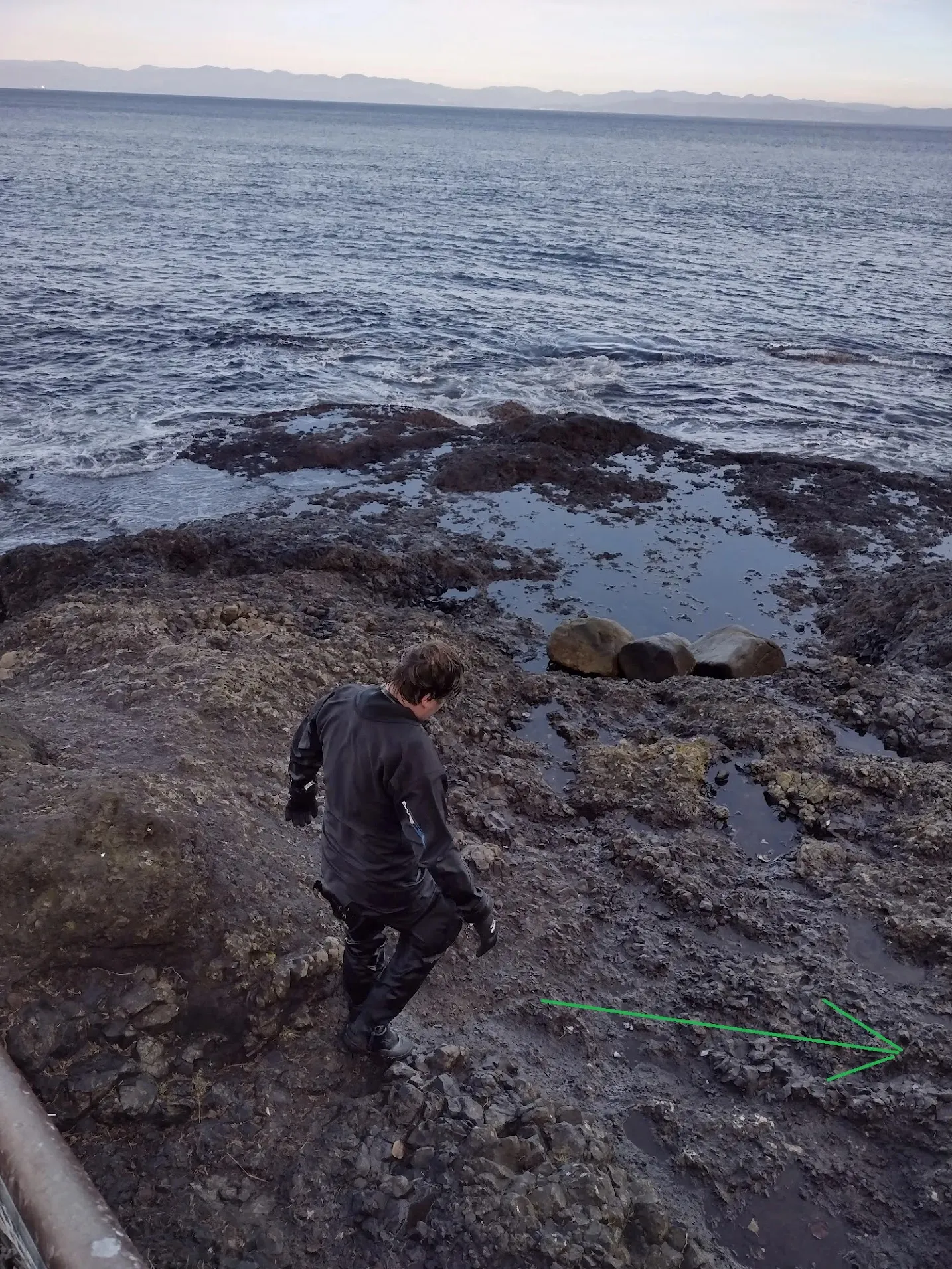
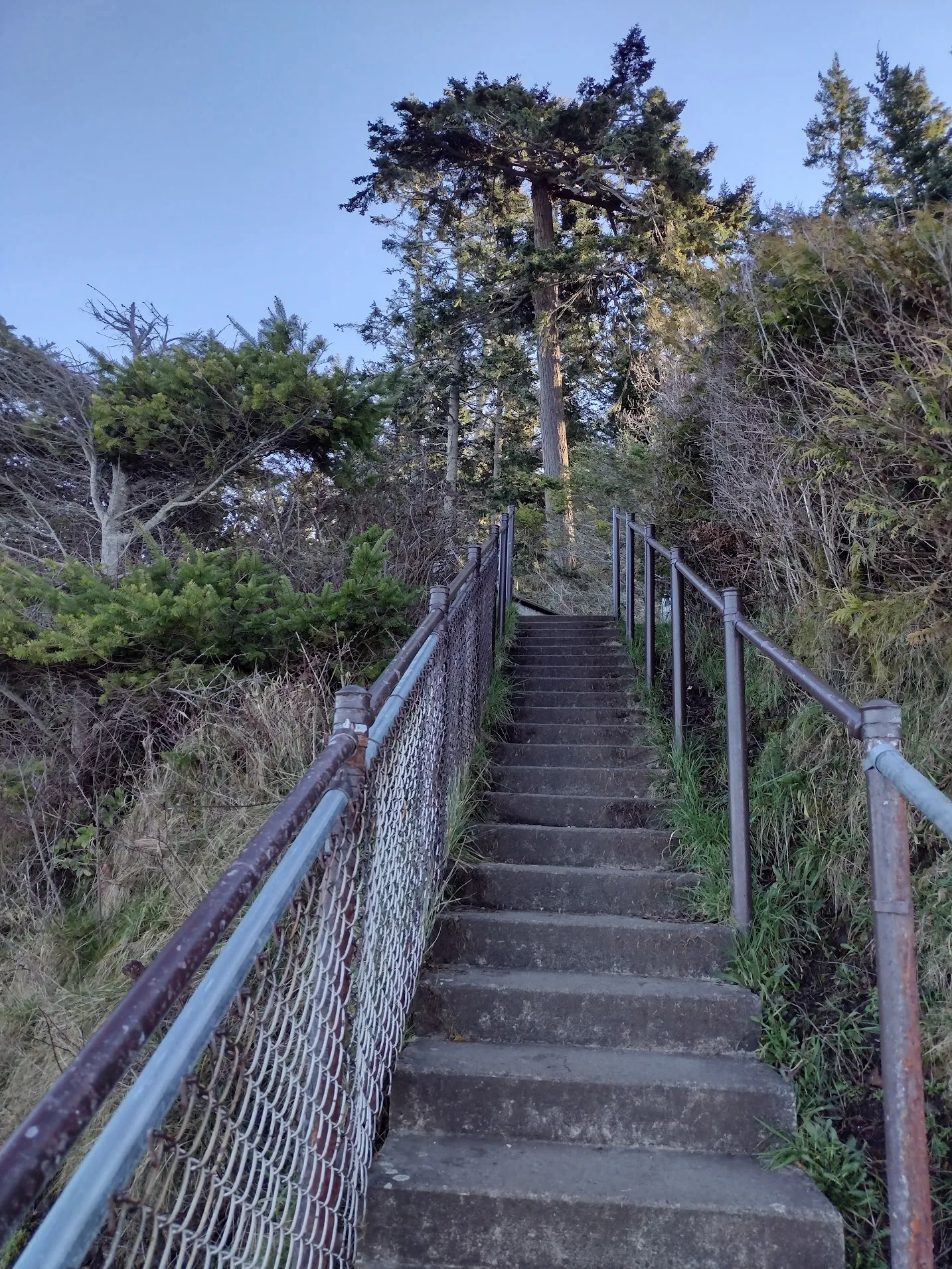
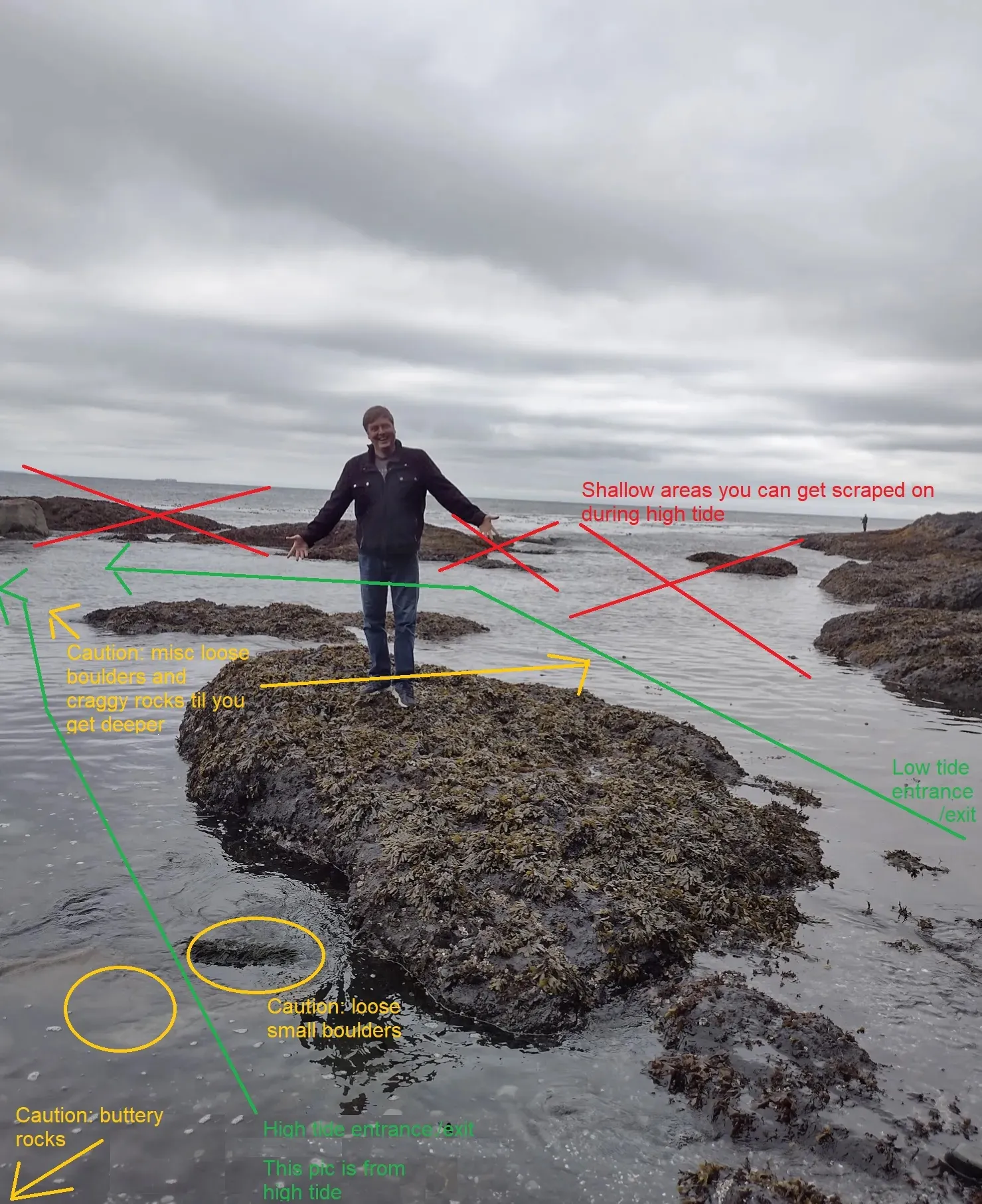
Enter by the kiosk near campsite #63. At the bottom of the stairs, use the cove on the right for the best entry (see photos link below).
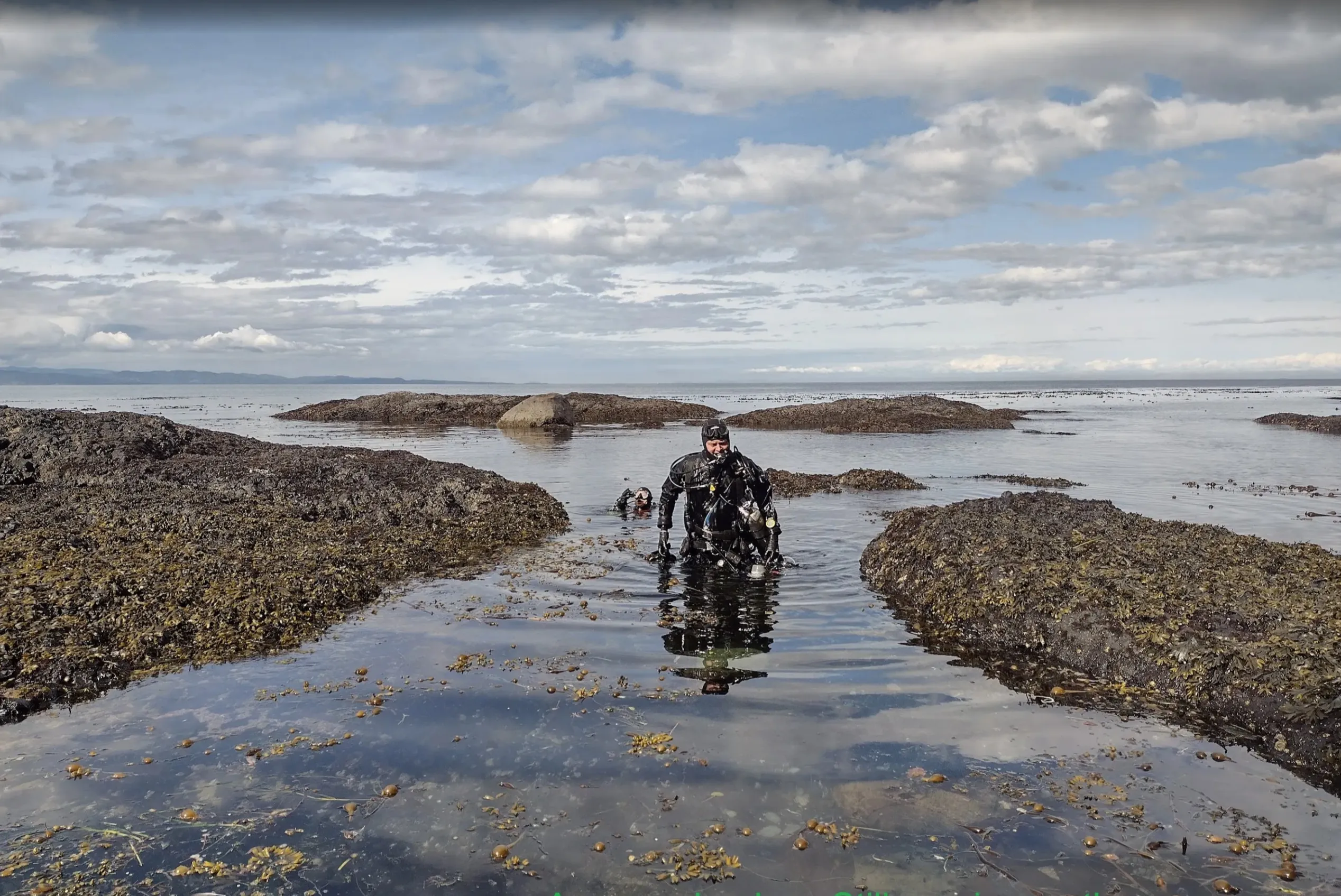
There is a rock at the front of this cove (typically when tide is below ~4-5 ft). Enter left or right of that rock depending on water level.
- Expect a rock scramble down and back up; carry gear in multiple loads.
- Use solid drysuit boots.
- We strongly advise against doubles here.
- Rebreathers can be a stretch given this dive profile and conditions.
- The entry is very slippery ("butter rocks"); keep your regulator in your mouth entering/exiting.
- Assume you may slip, even on calm/high-tide days.
- Do not dive this site unless you have very solid fin-donning skills.
- String straps may be especially helpful.
- If waves are present or likely to build, have a Plan B dive ready.
- Visibility can degrade after recent wave activity.
- Some divers use seasickness medication; Scuba Jess recommends Ginger Gravol gummy chews.
The site can feel maze-like. Take a solid compass bearing and identify your exact exit cove/staircase before committing.
You must return via the same staircase.
Use the channel that hugs the left side of entry (when looking out).
If waves pick up or tide is high, shallows to the right can scrape you on rocks. Fog can also reduce visual references; surface-check position periodically. If surge increases, treat it as a warning sign that conditions may be building. Waves can come in bursts, so waiting briefly for a lull may help with exit timing.
Kelp Safety
Be very careful in kelp.
- If snagged: stop, stay calm, and assess.
- Check common snag points (pony bottle, camera, fins, hoses).
- Back-kick gently.
- Carry a cutting tool and use if needed.
- Moving underwater through kelp is usually easier than pushing through on the surface.
Recommendation
Go with a more experienced diver on your first visit. Consider solo-diver training/equipment as well, since sharing gas in these conditions can be difficult.
If you have tips or additional observations, please comment or contact us via the About page.
⚠️ Before diving at Salt Creek, always check the site-specific wind/wave forecast, tide/currents, and recent reports (latest: Jul 6, 2026) !
Nearby Stations
Click a pin to see current, tide, camera, or buoy data near the dive site (you may need to zoom in or out)
Nearby Sites
- The Diamond Knot (<1 mile)
- Bachelor Rock (~3 miles)
- Freshwater Bay (~3 miles)
- Lake Crescent barge (~6 miles)
- Sledgehammer Wall (~7 miles)