Site Resources & Tools

Dive planning for Skyline
Site Briefing
Experience Level: Advanced (Complex Currents & Long Swims)
Max Depth: 80ft+ | Best Time: Slack before Ebb (Moderate Exchange Required)
Why Dive Here?
Skyline is an invertebrate-encrusted dive that rivals boat dives in the San Juan Islands. While the topography is primarily sloping rock, the site features a distinct 15-30 foot vertical wall that begins around 60 feet deep. The site truly comes alive with color starting at 50 feet and extends quite a distance down the channel.
🦐 Marine Life Highlights
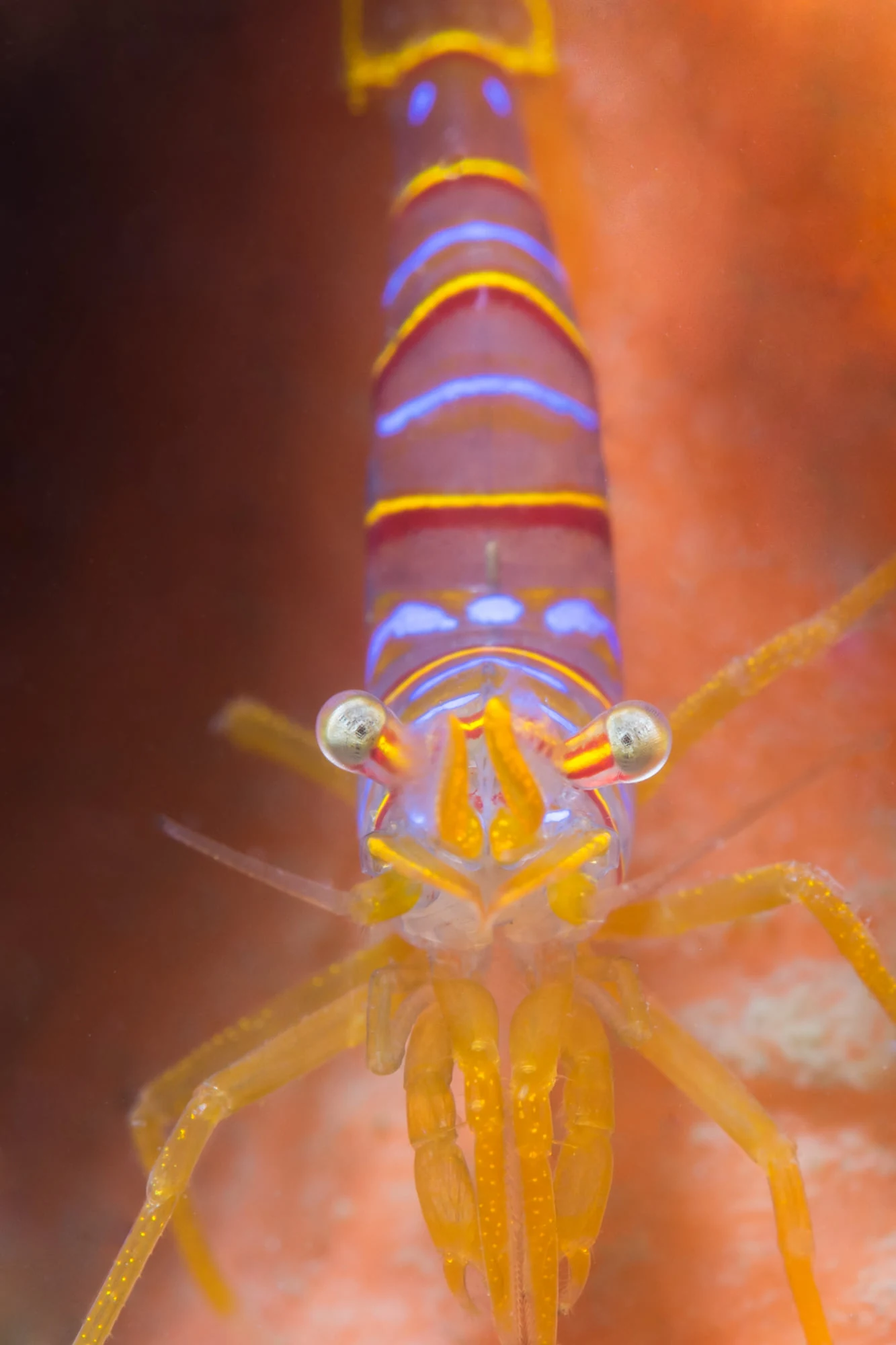
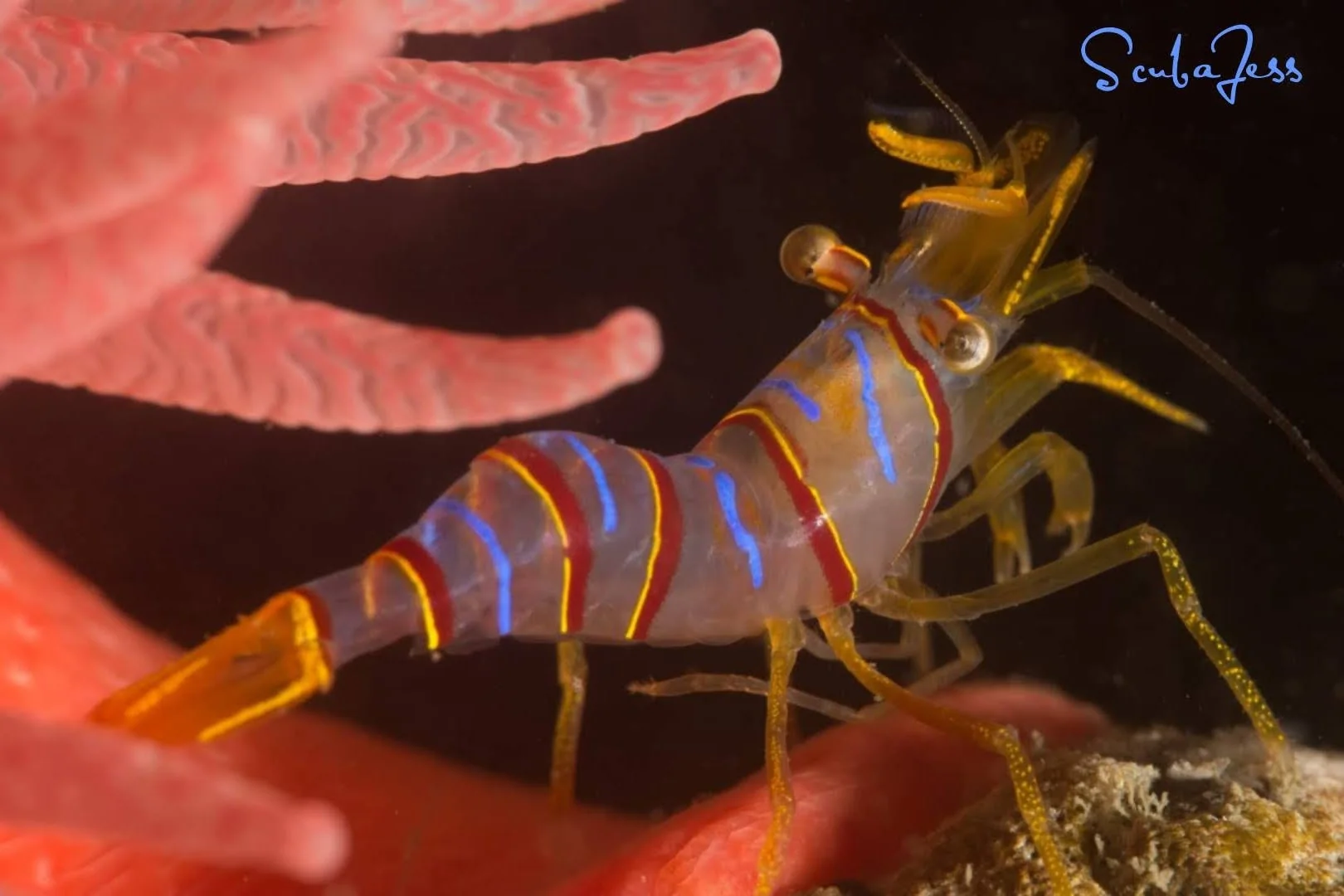
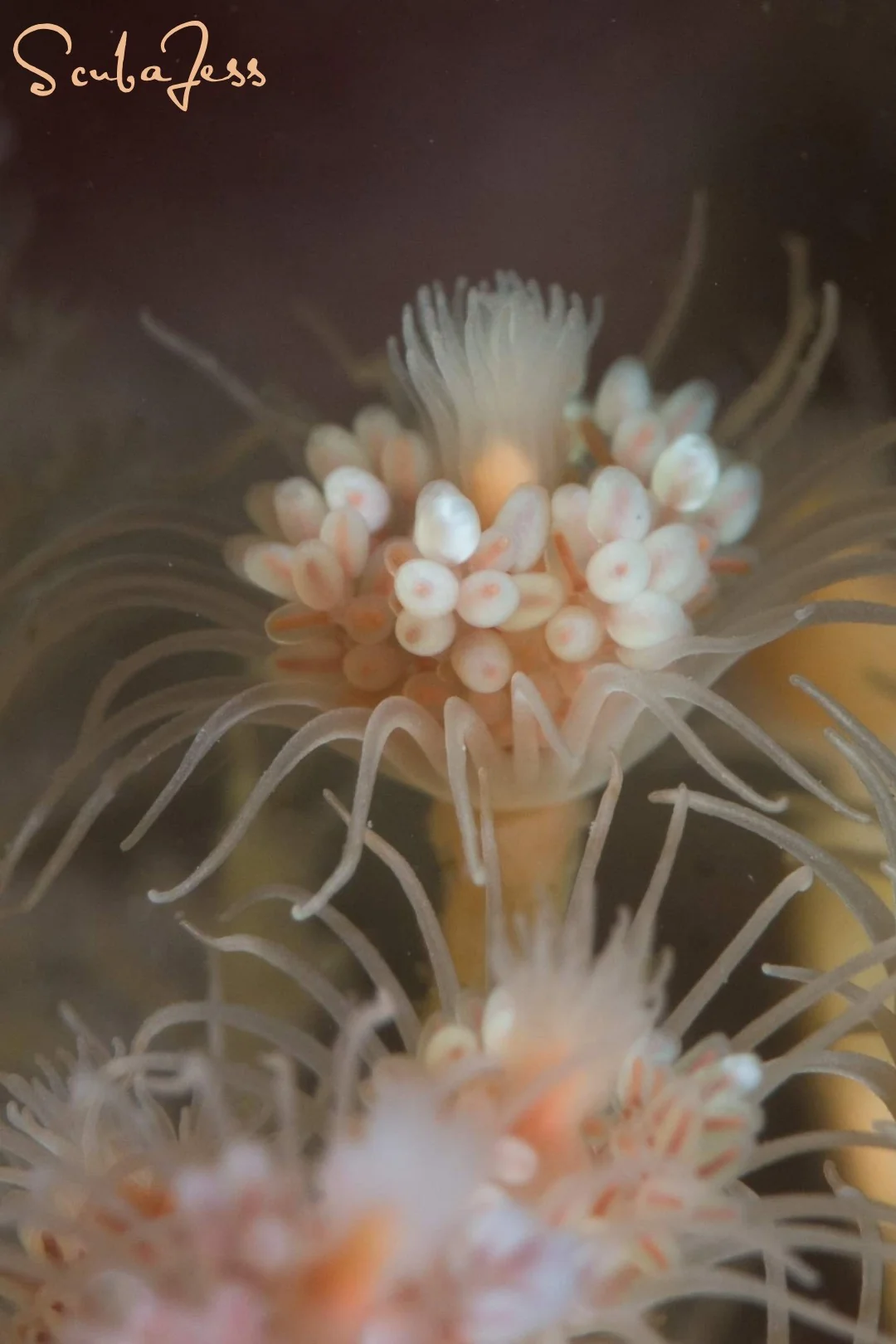
Candy Stripe Shrimp: This site is a premier location for spotting these elusive critters.
- Where to look: Check underneath the crimson anemones. They are transparent with blue, red, and yellow stripes.
- Pro Tip: They are often shy of dive lights, so inspect the back sides of the anemones carefully.
- "Sprinkles": If you look closely, you can sometimes see candy stripe shrimp with eggs inside their bodies. We call the baby candy stripe shrimp "sprinkles"!
Candy stripe shrimp start small and numerous early in the year, becoming larger but less numerous as the season progresses.
🌊 Strategy & Current Timing
Timing this site can be notoriously difficult. Do not assume slack time based solely on a single station.
- Flow Direction: Counterintuitively, the current here typically flows North on Flood and South on Ebb.
- The "Moderate Exchange" Rule: You need at least a moderate exchange for this dive to best predict slack. On low-exchange days, the current is unpredictable-it may never stop or switch direction, potentially sucking you out into Rosario Strait. pnwdiving.com prediction indicators require a minimal current level to receive a ✅ rating for this reason; the stronger flow provides assurance that the tide will actually turn.
- Station Agreement: A good strategy is to choose days where major nearby stations agree closely on slack time.
- The "Kelp Trick": Wait for the water to slow down significantly as seen from shore. Then swim out to where the kelp sticks furthest into the channel and wait.
- The Wait: Be patient. We sometimes wait 20 minutes or more at the kelp for the water to stop. The current here typically stops at the surface 20-30 minutes before it stops at depth. Descending when the water stops here is your best barometer to ensure slack during your dive.
The Entry & Descent
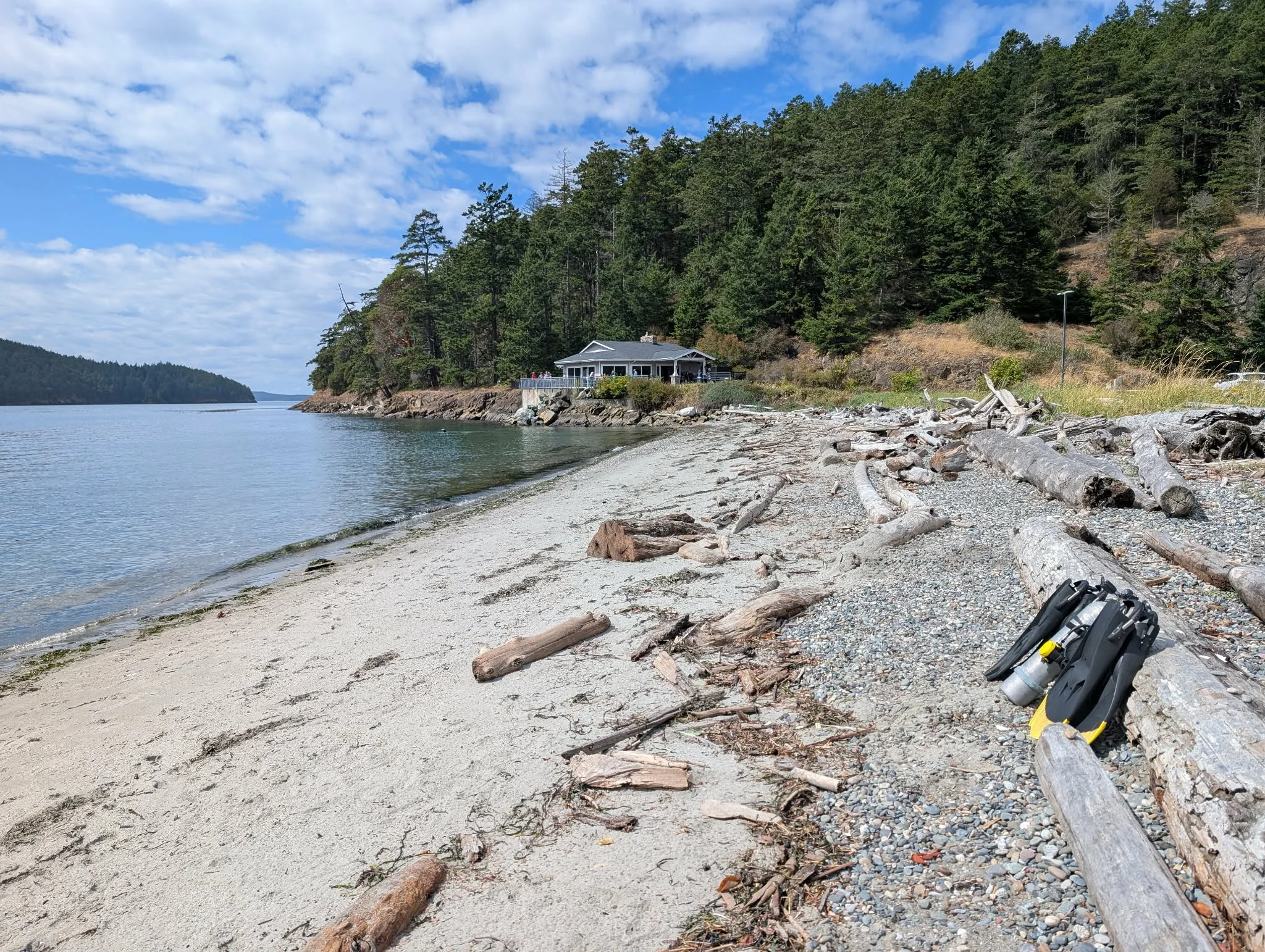
It is a long swim across a large sand flat to reach the kelp beds.
- Avoid the Back-Eddy: There is often a back-eddy closer to shore that you have to swim against. By swimming further out into the channel, you can avoid fighting this current.
- The "Free Ride": Experienced locals often use the tail end of the flood current in the channel to get a free ride to the descent point.
The Return
When returning from the wall:
- Keep the wall on your left.
- Eventually, you will hit a sandy slope at approximately 15 feet.
- CRITICAL: Do not follow this slope along the bottom, or you will end up swimming out into the channel along the edge of the sandbank.
- The Fix: Wait where the sand slope and rocks meet to do your safety stop. Then, swim across the sand bank hugging the rocks to the left, or surface swim back to the entry.
⚠️ Hazards & Tips
- Advanced Only: Given the long swims, potential for depth, and the risk of the tide not switching, this is an advanced dive. Go with a mentor or regular pnwdiving.com contributor for your first time.
- "Keyline Pie": On rare days with perfect timing, it is possible to hit both Skyline Wall and Keystone in a single day. Locals call this the "Keyline Pie"-an epic day of diving.
⚠️ Before diving at Skyline, always check the site-specific wind/wave forecast, tide/currents, and recent reports (latest: Jul 5, 2026) !
Nearby Stations
Click a pin to see current, tide, camera, or buoy data near the dive site (you may need to zoom in or out)
Nearby Sites
- Shannon Point Marine Center (~1 miles)
- Guemas Island wreck (~3 miles)
- Reef Point (~4 miles)
- James Island (East Side) (~4 miles)
- James Island (North Side) (~5 miles)